

























































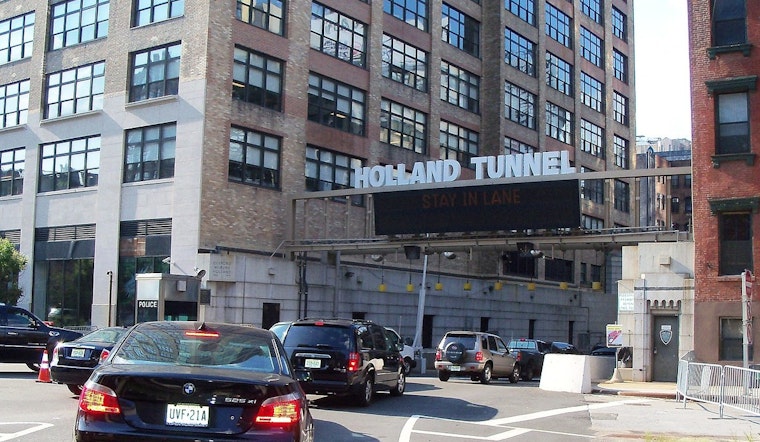
Weeks into New York City's congestion pricing experiment, aimed at reducing downtown Manhattan's vehicular clog and boosting public transport, comes a mixed bag of early tidings. Notably, commute times through the Holland and Lincoln tunnels have improved, as confirmed by a traffic tracker developed by two college students. Conversely, the city's traffic as a whole seems unaffected by the new tolling system, reported New Jersey Monitor. The pros and cons of this new pricing scheme are under scrutiny as it is both lauded for easing cross-river passage and criticized for its negligible impact on citywide traffic congestion.
Metropolitan Transportation Authority CEO Janno Lieber relayed reports of faster AM peak travel into the Central Business District (CBD), "We’re having consistent reports that a.m. peak travel into the CBD is much faster. I think you’ve all heard it," he told reporters, as recorded by the New Jersey Monitor. In contrast, traffics volumes on alternate routes like the Hugh L. Carey Tunnel and FDR Drive potenitally increased, possibly as drivers dodge the new charges, suggested Benjamin Moshes, one of the traffic tracker's creators.
The pushback from New Jersey has been palpable as evidenced by Jersey City Mayor Steven Fulop's proposal for a 'reverse congestion pricing' toll. Mayor Fulop insists that this retaliation could channel funds into New Jersey's public transit system, which he considers to be in dire need of investment. "My view is that New Jersey Transit is a terrible product, and it should be invested in more, and until you get a reliable transportation system in New Jersey, you can't responsibly think that people are going to take the trains," Fulop stated, as reported by FOX 5 NY. The concept is yet in gestation, with potential toll sites and exemptions still to be detailed.
Yet, this proposition saw resistance within New Jersey's own ranks. Democratic Rep. Josh Gottheimer voiced his disapproval on Good Day New York, "No, I want people to come to Jersey," he articulated, emphasizing his desire for lower taxes and more affordable living for hard-working families, rather than imposing additional charges that could discourage interstate commerce and travel. Opposing voices from both states reflect the contentious and nuanced debate, which spills over into the delicate balance of regional economies, environmental concerns, and the quality of urban life, as captured by FOX 5 NY.
Meanwhile, some policymakers in New Jersey, like Governor Phil Murphy, have taken legal action against New York's congestion pricing, doubting its impact on air quality across state lines and deeming it unfairly burdensome to New Jersey residents. Despite these frictions, the congestion pricing system is set to evolve, with scheduled increases that will see tolls rising to $12 per crossing by 2028 and ultimately hitting $15 by 2031, according to New Jersey Monitor. The intention is clear: to navigate through the tumult of urban traffic towards a city that breathes a little easier and moves a little smoother. Only time, data, and the collective will of impacted communities will determine the success of such a contentious but potentially transformative endeavor.





