

























































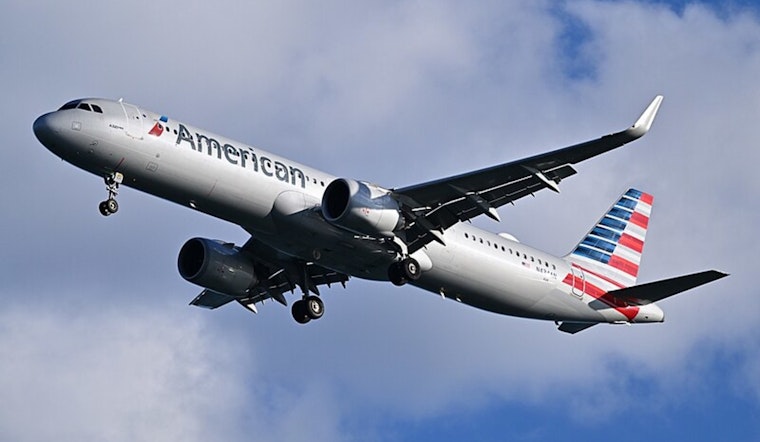
The tragic midair collision above Ronald Reagan Washington National Airport on Jan. 29 has sent shockwaves throughout the nation, claiming the lives of all 67 individuals on board the American Airlines flight and the Army Black Hawk helicopter. As reported by AP News, President Donald Trump confirmed there were no survivors from the crash and termed the moment as an "hour of anguish" for the country.
In Arizona, the incident echoed fears and conversations about airspace safety, particularly with the proximity of military and civilian flight operations. According to an interview with Col. Paul G. Harrell from the Papago Park Military Reservation (PPMR) provided to FOX10 Phoenix, Black Hawk helicopter operations frequently take place in the same airspace as Phoenix Sky Harbor International Airport, less than five miles apart. Harrell expressed his sympathy, "Your heart goes out to every one of those folks that’s involved." The Phoenix-based military base coordinates closely with Sky Harbor to ensure safety, with "established corridors throughout the Valley" aimed at preventing such accidents.
Military and aviation experts have begun dissecting the circumstances that could have allowed for such a calamity to take place. Jonathan Koziol, chief of staff for Army aviation, said in an interview obtained by AP News, "Both pilots had flown this specific route before, at night. This wasn't something new to either one of them." These remarks underline the regularity and familiarity of such routes, despite the seemingly chaotic and dense environment that forms the airspace of D.C.
Investigations are underway, as NTSB officials have retrieved the cockpit voice recorder and the flight data recorder to analyze due to the crash. According to Fox10 Phoenix, Mike Slack, a pilot and aviation attorney, commented on the inevitability of this incident, "We now have gotten that collision that we knew was inevitable." He highlighted the problematic mixing of military and civilian air traffic and speculated that changes to communication systems both on the ground and in the air may be scrutinized as part of the NTSB investigation.





