

























































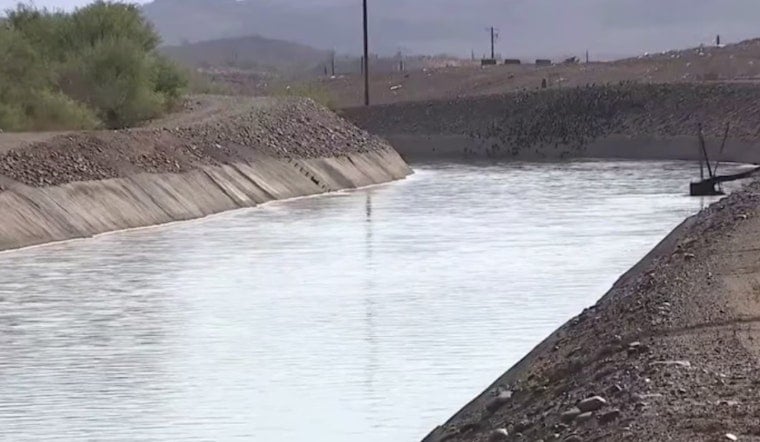
Apache Junction relies entirely on Colorado River water, and city officials say that dependence is about to get expensive. As federal shortage rules squeeze supplies flowing through the Central Arizona Project canal, water prices are rising for residents across Arizona, even as local leaders insist there is no danger of taps running dry.
According to FOX 10 Phoenix, municipalities that depend on the Colorado River are facing impending federal water cuts that will force expensive infrastructure investment in the years ahead. Apache Junction, a fast-growing city with significant new development, is among the communities racing to adapt, and officials there maintain they already have solutions in place for the coming reductions.
A $60 Million Expansion Already Underway
The centerpiece of that response is a major upgrade to the Superstition Area Water Plant. Apache Junction Water District's governing board approved a $2.7 million construction administration contract in October 2025 as part of a roughly $60 million project that will boost the plant's treatment capacity from 4 million to 10 million gallons per day, according to YourValley.net. FOX 10 Phoenix reports the expansion is being funded initially by developers building the 10,500-home Superstition Vistas community, easing pressure on existing ratepayers even as the district plans ahead for growth.
Apache Junction Deputy Water Director Brian Draper says the city is also looking at technology that would have sounded unthinkable not long ago: turning wastewater into drinking water. Advanced water purification can augment water supplies and lower reliance on Colorado River water, Draper said, per FOX 10 Phoenix's reporting, and officials plan to pilot the process locally. The city also has groundwater supplies not currently in use, giving it another layer of backup beyond the river.
Why the River Is Shrinking
The pressure driving all of this comes from Lake Mead. Under federal Tier 1 shortage guidelines that remain in place through 2026, Arizona faces an annual cut of 512,000 acre-feet of Colorado River water — an 18% reduction in the state's total allocation and a 30% cut to normal Central Arizona Project supply, according to the Central Arizona Project. Those reductions trace back to a decision Arizona made decades ago: to secure federal funding for the CAP canal in 1968, the state accepted junior water rights status, meaning its supply absorbs shortages before senior rights holders in California face mandatory cuts, as KTAR News has reported.
That legal framework is now colliding with rising costs. CAP's fixed operation and maintenance delivery rates under Tier 1 shortage conditions climbed from $159 per acre-foot in 2024 to $166 in 2025, and are scheduled to hit $176 in 2026 and $189 in 2027, per CAP's own rate schedule. Those wholesale increases are a major reason water prices are going up for Arizona residents, even as cities work to keep supplies stable.
Storage Credits and a Looming Deadline
Apache Junction isn't relying only on new construction. The city has long-term storage credits banked underground that it can recover during river shortfalls, a cushion built through the Arizona Water Banking Authority, which has stored more than 2 million acre-feet of Colorado River water in underground aquifers since 1996 to serve as insurance for municipal users, according to the authority's own planning documents. Kathryn Sorensen, with the Kyle Center for Water Policy at Arizona State University, has been tracking how cities across the Valley are positioning themselves for the shortages ahead.
The stakes are rising because the rules governing the entire river system are about to change. The 2007 Colorado River Interim Guidelines expire at the end of this year, and federal draft options have warned Arizona could face cuts of up to 57% under severe drought scenarios, a threat Hoodline detailed in January. Seven basin states are still negotiating what comes next.
Federal Help and Local Political Friction
Washington is trying to soften the blow. The federal Bureau of Reclamation is offering cities $325 per acre-foot for conserved Colorado River water this year, down from $400 per acre-foot in prior years, to help fund local conservation programs, according to the Associated Press. Those grants are helping pay for new municipal wells and water-efficiency rebates in communities working to stretch every drop.
Not every city is moving as fast as Apache Junction on advanced purification. Scottsdale's City Council paused funding in mid-2026 for expanding its own Advanced Water Treatment facility, despite existing ozonation and reverse-osmosis technology already in place, illustrating the political and public-acceptance hurdles that toilet-to-tap projects face even in Valley communities with the money to build them. Arizona legalized direct potable reuse statewide when the Governor's Regulatory Review Council approved the Arizona Department of Environmental Quality's Advanced Water Purification rules, which took effect in March 2025 after more than two years of development.
Growth Rules Face Their Own Legal Fight
Even as cities chase new supply, the state's authority to limit growth based on water availability is under legal strain. In April and June 2026, a Maricopa County Superior Court judge ruled that the Arizona Department of Water Resources acted illegally when it created new regulations limiting housing development dependent on groundwater and an alternative 100-year supply program, according to the Arizona Daily Star. The court found regulators had exceeded their authority under the 1980 Groundwater Management Act, adding fresh uncertainty to how fast-growing suburbs like Apache Junction can balance new construction against water-smart development.
Draper says new development and businesses must be cognizant of the amount of water they will use, a message city officials are pushing as Apache Junction works to ensure growth stays water-smart. FOX 10 Phoenix, whose reporting anchors much of the local detail here, notes that despite the rising costs and looming federal cuts, officials maintain residents should not be concerned about tap water shortages — the water, they say, will keep flowing even as the bill for keeping it flowing keeps climbing.





