

























































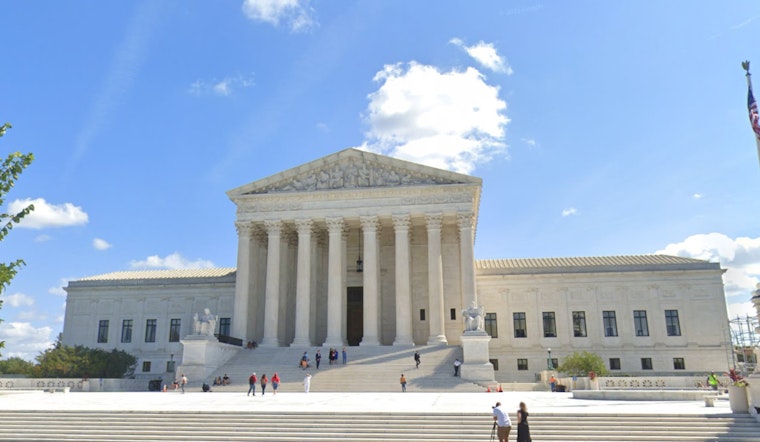
The Supreme Court is set to hear arguments today surrounding a contentious Texas law aimed at preventing children from accessing pornography, a case that pits the rights to free speech against state regulation over online content, as reported by KSAT. Texas, along with over a dozen other states, has enacted similar legislation which has led certain adult sites like Pornhub to cease operations within their borders due to compliance challenges.
In defense of its law, Texas has expressed a need to shield minors from "some of the most prurient sexual content imaginable," and the technological uplift over recent years arguably equips online platforms with the ability to filter users by age in a more efficient manner akin to ID checks at brick-and-mortar establishments recognized by past Supreme Court rulings, KSAT noted. However, the law has sparked concerns over privacy, as it would require adults to provide personal information, thereby raising risks of hacking or tracking; this requirement has spurred criticism from the Free Speech Coalition, an adult-entertainment industry group, adding that the law's broad language might even affect sexual education materials or simulated sexual content in films.
Vera Eidelman, an ACLU staff attorney, emphasized the broader implications of such regulatory measures, stating, "This really is about how the government can regulate any speech that it doesn’t like," and drawing parallels to the history of free speech debates in an interview obtained by Associated Press. The Supreme Court's previous track record includes striking down parts of a similar law in 1996 and ruling against another in 2004, although in the latter case it affirmed content filtering measures as constitutional.
Texas prevails in the 5th Circuit Court of Appeals, a divided panel which cast aside a lower court ruling and allowed the age verification requirement to stand, though the Supreme Court had refused an emergency appeal to suspend age verification while legal proceedings were underway. The statute carries substantial fines, which can escalate dramatically in instances involving minors, demonstrating the serious stakes at play in Texas's legislative push towards moderating children's online experiences, as outlined by KSAT. The upcoming Supreme Court deliberation stands not only as a potentially defining moment for Texas but for other states with similar laws, including Tennessee, Arkansas, Indiana, Kansas, Louisiana, Mississippi, Montana, Oklahoma, Utah, and Virginia, indicative of a broader national conversation on the balance between protecting the young and preserving the open fields of speech in the digital age.



