

























































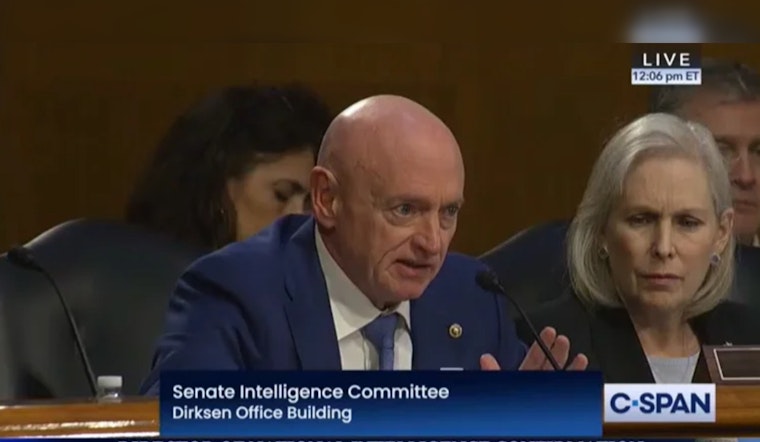
At a recent Senate Intelligence Committee hearing, controversy stirred as nominee Tulsi Gabbard for Director of National Intelligence faced rigorous questioning by Senator Mark Kelly. Kelly challenged Gabbard on her past public skepticism over U.S. intelligence assessments, specifically regarding chemical weapons in Syria. According to a press release from Arizona Senator Mark Kelly's office, the discourse centered around two incidents in Douma and Khan Shaykhun, for which the U.S. had previously released declassified assessments indicating Assad's responsibility.
Gabbard, having served in both Congress and the Army, was pressed by Kelly to lay out her approach to intelligence analysis and how she, if confirmed, would navigate the vast troves of intelligence to arrive at thoughtful conclusions. "I will build a strong team around me," Gabbard assured, valuing dissenting voices for thorough vetting before presenting intelligence reports, as mentioned in the same press release. Kelly confronted her with the fact that she embraced the views of sources that lacked credibility, such as a discredited professor and a chemistry student known for defending the Assad regime, without applying the same skepticism she held towards U.S. intelligence.
Senator Kelly didn't hold back, stating, "At the same time you were skeptical of our intelligence community’s assessments, you would not apply the same skepticism to information that came from sympathizers of Russia and Assad," as reported by the Arizona Senator's office. Echoing concerns of impartiality, Kelly illuminated the discrepancy between Gabbard's acknowledged method of analysis and her actual practice. Gabbard confessed to being previously unaware of the questionable affiliations of her sources – the professor's appearances on Russian state media and the student's defense of the Assad regime.
When probed on the specifics of why she doubted intelligence conclusions on just the two attacks, Gabbard referred to fears of military escalation and the possibility of a repeat of the Iraq scenario, stating, "The question specifically that I raised around these two came about because there were two reasons," as per a report by the Arizona Senator's office. She then mentioned the high confidence with which the assessments were made and the reliance on sources in an Al-Qaeda controlled area. Despite this, she reaffirmed her process of weighing claims against the intelligence community's significant evidence and assessments during her Senate testimony.





