

























































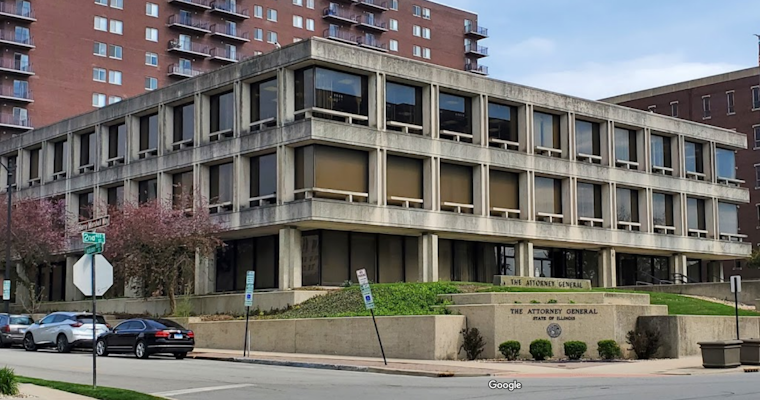
In a united front against what could be seen as an unmistakable dismantling of consumer protections, Attorney General Kwame Raoul has banded together with counterparts from across the country. The coalition of 23 attorneys general is pushing back against the efforts by the Trump administration and business magnate Elon Musk to defund the Consumer Financial Protection Bureau (CFPB), an agency that has long been a watchdog over financial institutions. The CFPB's remit includes oversight of banks, lenders, and credit card companies, ensuring adherence to federal regulations designed to protect consumers.
Raoul, who has regularly collaborated with the CFPB to shield consumers in Illinois, didn't mince words about the critical role the agency plays. "Since its creation, the Consumer Financial Protection Bureau has assisted millions of Americans by helping homeowners facing foreclosure stay in their homes, stopping banks from charging junk fees and returning more than $20 billion to consumers nationwide," he proclaimed. His statement, echoed by a multi-state alliance, signals a robust defense of the CFPB's mandate to hold financial operators to account. The attorneys general filed an amicus brief on February 20th in the U.S. District Court for the District of Maryland, asserting that the agency’s dissolution would bring significant harm to consumers and greatly weaken enforcement of federal consumer protection laws, as detailed in an announcement from Raoul's office.
According to the announcement by the Illinois Attorney General's office, the Trump administration directed the CFPB to halt all operations and freeze new investigations as of February 9. The brief argues that such actions undermine the CFPB's authority and capacity to protect consumers from fraud and deceptive financial practices. Moreover, without federal oversight, large financial institutions might relax their compliance with consumer protections, potentially leading to a financial landscape reminiscent of the pre-Great Recession era.
The CFPB was originally formed in the wake of the financial crisis in 2011, with intentions to enforce consumer protection statutes and collaborate with state attorneys general on a myriad of financial matters. Its mission extended to combating deceptive, unfair, and abusive behavior by financial service companies. This has included, among other actions, taking a stand with Raoul's office and several other states against an unlawful debt settlement operation. These efforts are compounded by investigations into organizations like Navient and Nationstar Mortgage, also known as Mr. Cooper, known for their contentious student loan and mortgage servicing practices. This broad support for the CFPB's existence and mission underscores its perceived value in providing an essential layer of consumer financial protection.
In the collective action to defend the CFPB, Raoul finds support from a host of states, encompassing Arizona, California, Colorado, Connecticut, Delaware, the District of Columbia, Hawaii, Maine, Maryland, Massachusetts, Michigan, Minnesota, Nevada, New Jersey, New Mexico, New York, North Carolina, Oregon, Rhode Island, Vermont, Washington, and Wisconsin.


