

























































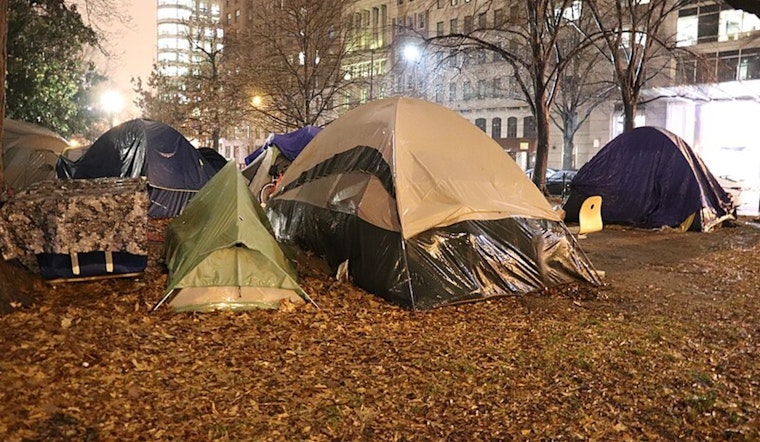
The city's removal of tent encampments at Gompers Park on Chicago's Far Northwest Side began under the watchful eyes of cranes and law enforcement this past Friday, despite protests from community members and concerns of insufficient notice given to residents of the encampment. According to ABC7 Chicago, some residents had been living in the park for years, with one woman claiming a 15-year tenure.
Witnesses described the scene as police stood in front of cranes that dismantled and disposed of makeshift homes and personal belongings. "I'm standing where someone's home used to be, and I saw it stripped from the ground with a massive crane enthroned to the garbage," one community member told ABC7 Chicago. Alderman Samantha Nugent defended the city's actions stating that the structures were "really unsafe and highly combustible," and referred to the 36 emergency calls made to the Chicago Fire Department regarding the park since January of last year.
Simultaneously, there was a clash between activists and city officials on the grounds of safety and health concerns. Ald. Nugent detailed the challenges posed by the encampment, citing numerous fires, dog attacks, and drug use, which affected community activities like Little League, as reported by NBC Chicago. The clearing was partly in preparation for an Accelerated Moving Event (AME) scheduled for March 5, during which the city's Department of Family and Support Services (DFSS) promised to connect residents with shelter options and support services at once.
While the city reasons that the clearing is part of an effort to introduce safer living arrangements, residents were seen scrambling to protect their belongings, "I was protecting my stuff. And, they put everything in the garbage," a woman from the encampment told NBC Chicago. Joe Castello, a local paramedic, criticized the city's approach for lack of organization and the absence of resources such as warming stations given the freezing temperatures.
The Restore Gompers Park Coalition expressed its dismay over the "confusion and chaos" caused by the recent events while emphasizing the need for more structured and compassionate solutions for the unhoused. They have been advocating for an AME since the summer of 2024, which has shown promising results, in a statement obtained by NBC Chicago.





