

























































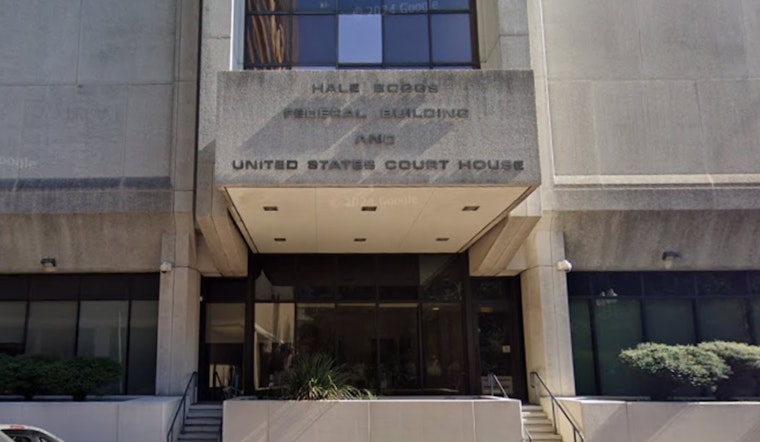
Under the weight of the federal government's codes and statutes, another individual's journey has been abruptly halted. The U.S. Attorney's Office for the Eastern District of Louisiana has brought charges against Cesar Ruiz-Aguilar, a Mexican national, for allegedly re-entering the United States after previously being removed. He was indicted on the charge of illegal re-entry of a removed alien.
Not to simply walk again into the country that once cast him out, Ruiz-Aguilar is accused of having re-entered the U.S. without the consent of the Attorney General. His history with U.S. immigration authorities dates back, with removals recorded on March 13, 2010, and May 17, 2017. According to the U.S. Attorney's Office, he was located within the United States border on February 1, 2024.
If convicted, Ruiz-Aguilar could face a maximum of two years imprisonment, potentially to be followed by a supervised release of one year. On top of that, he may be slapped with a fine that goes up to $250,000, and there's also a special assessment fee of $100 tacked on. But as U.S. officials are quick to note, the charges are merely that – charges. It's a cornerstone of the justice system that the presumption of innocence remains unless guilt is proven beyond a reasonable doubt, as reported by the U.S. Attorney's Office.
Acting U.S. Attorney Michael M. Simpson reinforced this notion, stating, "a bill of information is merely a charge and that the guilt of the defendant must be proven beyond a reasonable doubt." Simpson also took the opportunity to commend the collaborative work between the U.S. Immigration and Customs Enforcement, Enforcement and Removal Operations, and the Tangipahoa Sheriff's Office. Taking charge of the prosecution is Assistant United States Attorney Jon M. Maestri of the General Crimes Unit, likely to be meticulously weaving together evidence for the upcoming legal proceedings, as stated by the U.S. Attorney's Office.
As immigration continues to spur debate and legal wrangling, cases like Ruiz-Aguilar's emerge as touchpoints in a broader conversation about border control, justice, and the human stories behind each docket number. What unfolds in courtrooms is but a reflection, a single frame in the moving picture of America's grappling with the complexities of immigration policy and the lives it irrevocably alters.





