

























































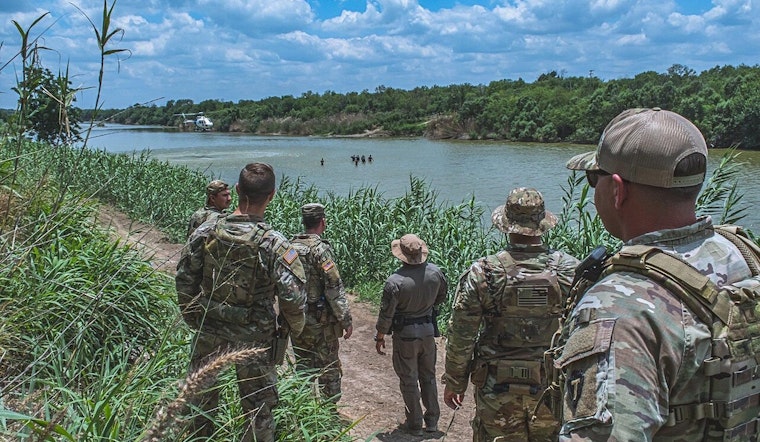
In a move that has ignited a flurry of reactions, Texas National Guard soldiers are now authorized to make immigration arrests following an agreement with the Trump administration. Governor Greg Abbott took to social media on Sunday to announce this new partnership, declaring it to be effective immediately. "This boosts man power for border security," he stated in posts that are ringing through the political landscape.
The specifics around the scope of the National Guard's authority in this partnership remains somewhat nebulous. Despite outreach for further clarification, the governor's office had not provided additional details as of Monday morning. According to a report by CBS Austin, the memorandum of understanding signed with U.S. Customs and Border Protection grants National Guard troops the capability to perform patrols and to assume the role of an immigration agent, under the condition that a U.S. immigration officer or Border Patrol agent is present.
This unprecedented delegation of immigration enforcement to state-level military forces has raised concerns among immigration advocates and legal experts, who question the constitutional and practical implications of such a move. The partnership, as outlined, would see soldiers supplement existing border patrol efforts, potentially shifting the dynamics and approach of border security operations.
Further reporting by The Texas Tribune reaffirms the immediate nature of the agreement, as noted by Abbott. The same outlet reported that Breitbart Texas was first to disclose details of the memorandum, a significant development in the state's ongoing efforts to crack down on illegal immigration, an issue that has continually been at the forefront of political and social discourse.
As the implementation of this agreement takes shape, eyes will remain fixed on Texas, where the lines between federal immigration enforcement and state military involvement have been redrawn, marking a potentially pivotal moment in the nation's immigration enforcement narrative.





