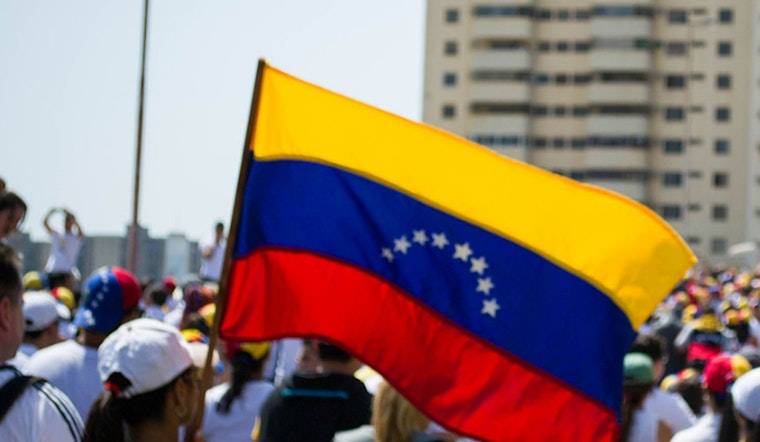
The Venezuelan community across the United States is grappling with uncertainty following the Trump administration's decision to terminate a program that shielded approximately 350,000 Venezuelans from deportation, as reported by CBS News Chicago. Homeland Security Secretary Kristi Noem announced the end of Temporary Protected Status (TPS) for these individuals, which is set to expire in April, leaving them with a mere two months to adjust their lives without the right to work legally in the country.
In stark contrast, Venezuelans had previously been able to rely on TPS to legally stay and work in the country, escaping the political and economic tumult of their homeland. This move is consistent with the Trump administration's numerous actions to tighten immigration restrictions, aiming to fulfill campaign commitments to curb illegal residency and to execute what is being branded as the largest mass deportation effort in U.S. history. As detailed in an article by AP News, roughly half of the estimated 600,000 Venezuelans currently protected are directly affected, with the remainder set to lose protection by September's end.
For many, like Andreina Hernandez, who spoke to CBS News Chicago, this decision spells potential disaster. Hernandez, who has rebuilt her life in Chicago, expressed her disbelief and concern: "What am I going to do if they say, 'Hey, you can't work anymore?'" Venezuelan immigrants have been contributing to their local communities, and as Chicago immigration attorney Ingrid Cova emphasized, "People didn't leave Venezuela just because they wanted to," she said. "They left because of the crisis. They because they were being persecuted. They left because the government was oppressing them. Not everyone is a criminal, and like a lot of people here are just, you know, they're here like building a life."
The Department of Homeland Security has justified the policy reversal by asserting that conditions in Venezuela have sufficiently improved to warrant terminating the protective status. Yet, individuals like Henry Carmona, who arrived in the U.S. in 2022 and whose life was threatened under Maduro's regime, cannot fathom returning. "I fear for my life," he told AP News. Meanwhile, opposition leader Maria Corina Machado has engaged with U.S. Congress members to seek "a type of effective protection" for law-abiding Venezuelans.
Grassroots initiatives are already underway to combat the policy change. Advocates, including Adelys Ferro of the Venezuelan American Caucus, gathered in the Miami area, known colloquially as "Doralzuela" for its dense Venezuelan population, have pledged to "use every single legal tool that we have" to oppose the end of TPS. Despite DHS's position, these advocates emphasize that the homeland remains unsafe, and vehemently oppose the notion of returning the Venezuelan diaspora to conditions they assert have not yet ameliorated.