

























































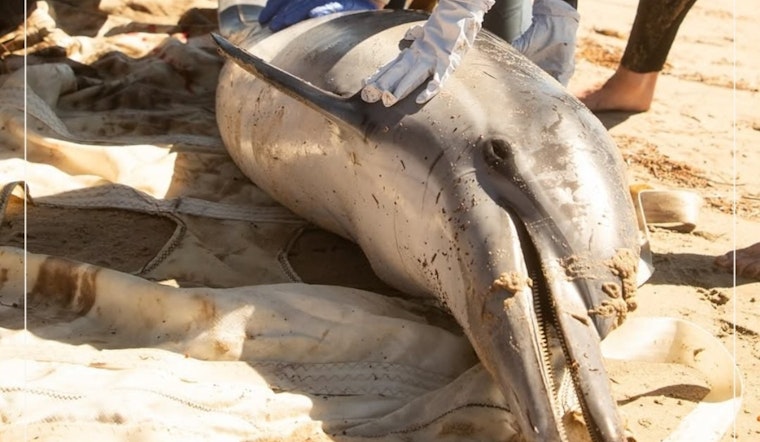
The coasts of Southern California are seeing an unprecedented number of marine mammals falling victim to a toxic algal bloom, and according to local officials, the situation is likely to deteriorate further. KTLA's recent reporting highlighted discussions from the Marine Mammal Care Center Los Angeles, noting an alarming increase in stranded dolphins, surpassing the previous major domoic acid incident in 2023.
These risings, in toxic algae levels are not receding, with the MMCC Los Angeles stating, "This week, we saw more stranded dolphins (both alive and deceased) than we saw during the major domoic acid (DA) bloom in 2023," on a Facebook post. The number of DA-producing algae has increased, a trend that's expected to continue, causing concern among officials and the public alike. The MMCC's post was crystal clear: "We anticipate that it will only get worse."
Beyond the environmental impacts, these algal blooms have stressed the resources of local marine animal care facilities. The MMCC urges the community to support their efforts, as they navigate a financial strain caused by the higher volume of animals requiring rescue and treatment. "Our team is working heroically to respond to every call and to rescue every animal they can," the center shared, requesting donations to help give affected marine mammals "a second chance at life."
The risks associated with the algal blooms extend to humans and pets as well. Officials are warning the public to maintain a safe distance from sick or stranded animals due to the potential for unpredictably aggressive behavior upon awakening from seizures. In particular, sea lions under the influence of domoic acid can pose considerable danger. "This is a safety issue for people and their pets as much, as it is for the marine mammals," the MMCC cautioned. Reports of marine mammal incidents can be made by calling 1-800-39-WHALE, or by alerting a local lifeguard.
Understanding the scope of this environmental event is vital, with the MMCC shedding light on contributing factors. The usual suspects, climate change and warming ocean temperatures, are in the mix – but so are the consequences of human actions. Officials believe, however, that the current spike is purely due to domoic acid toxicosis. They also do not discount the possibility that chemical runoff from recent LA fires could exacerbate these toxic algal blooms. The MMCC and local partners, such as the Los Angeles County Fire Department's Lifeguard Division and various city governments, are tackling this challenging environmental and public health issue head-on.





