

























































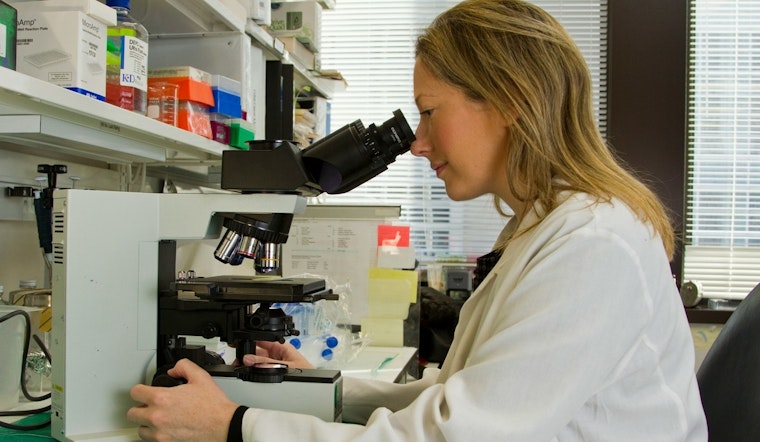
Facing an uncertain future, scientists in Chicago and across the nation are raising their voices against the Trump administration's recent budget cuts to the National Institutes of Health (NIH), citing a profound ripple effect that could stall groundbreaking research and innovation. According to a Chicago Sun-Times report, the situation has grown dire for scholars like Anna Vlasits, a neurobiologist at the University of Illinois Chicago, and Jane Miglo, who is dedicated to finding a cure for ovarian cancer. These researchers, along with senior director Michael Schultz from Portal Innovations, joined a public demonstration dubbed "Stand Up for Science" to draw attention to what they perceive as an attack on the lifeblood of biomedical research.
In the midst of establishing her laboratory, Vlasits feels the pressure of needing NIH funding to carry on her work on the retina, "I’m at the stage I’m just building," she told the Chicago Sun-Times, "I got a startup fund from the University of Illinois to get going, but after that I need NIH funding." She and her colleagues are not alone, as similar experiences are echoed by researchers nationwide, grappling with sudden cuts to crucial programs and admissions. Cold Spring Harbor Laboratory, for instance, has described the scenario as "unsustainable" in its official statement, spotlighting the precarious future faced by institutions responsible for fostering advances in science and technology.
The breadth of the cuts extends into multiple areas of research. In Baltimore, Rick Huganir from Johns Hopkins University (JHU) discovered the urgency of these cuts when his long-term research on the SYNGAP1 gene, crucial for kids with intellectual disabilities, came under threat. "The search for a cure for these rare disorders is a race against time," Huganir explained in a statement obtained by NBC News, emphasizing the high stakes involved for patients and their families.
Trump's administration argues that these decisions are meant to optimize the allocation of taxpayer funds. White House spokesperson Kush Desai supported the cuts, stating, "The Trump administration is committed to slashing waste, fraud, and abuse," as reported by NBC News. However, the reaction among the scientific community suggests otherwise, as they prepare for legal and public opinion battles to safeguard decades of scientific progress that have propelled U.S. medical innovation to its current heights.
The convergence of protests and legal pushbacks reflect a deep-seated concern for the future of scientific inquiry in America. For many dedicated researchers like Vlasits, Miglo, and Huganir, the recent cuts represent more than just budgetary constraints; they signify a potential loss of discoveries that could have reached beyond the realms of their laboratories, benefitting the larger society and perhaps, the health of the nation itself.





