

























































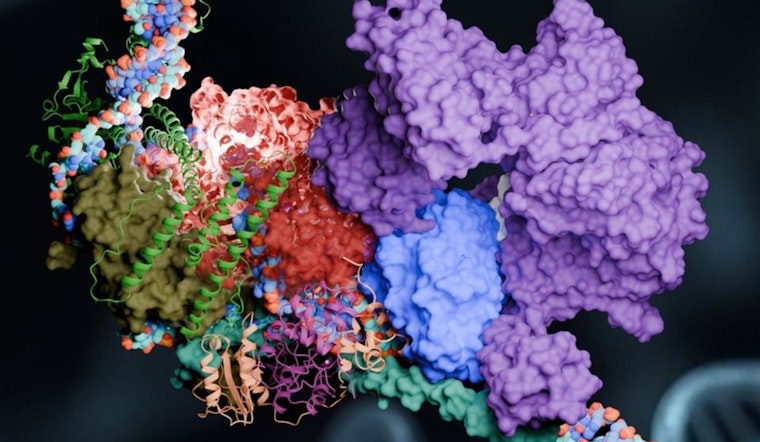
Georgia State University researchers have made strides in understanding how our bodies repair DNA, courtesy of simulations run on the Department of Energy’s Summit supercomputer at Oak Ridge National Laboratory. The detailed computational study, recently published in Nature Communications, zeroes in on a complex molecular pathway known as nucleotide excision repair (NER), which our cells use to correct DNA damage caused by UV rays and other carcinogens.
The focus of the study was to intricately model a component of NER called the pre-incision complex, or PInC. Unraveling the specific mechanics and sequence of events in NER could aid in developing new treatments for diseases like cancer. "We're interested in the way cells repair their genetic material," Georgia State University’s chemistry professor Ivaylo Ivanov said in a statement released by Oak Ridge National Laboratory News. "NER is a versatile pathway that repairs all kinds of different DNA damage using a three-stage process that relies on delicately balanced molecular machinery."
NER operates through a sequence of three stages: recognition of damage, verification of the damage, and then the actual repair. This process involves an array of proteins that act like emergency responders, ascertaining the damage location, prepping the site, and removing the damaged DNA before filling in the gaps. These stages are crucial, as errors in NER can result in conditions that bring about premature aging or increase cancer susceptibility.
What the research team required was to definitely map out PInC's structure. "Simulations allow us to zero in on these important regions because mutations that interfere with the function of the NER complex often occur at community interfaces, which are the most dynamic regions of the machine," Ivanov explained to Oak Ridge National Laboratory News. Certain mutations can severely affect how this repair complex functions, leading to diseases like xeroderma pigmentosum and Cockayne syndrome.
Unfortunately, with Summit supercomputer having retired, the Georgia State team plans to migrate their research to Frontier, Summit’s more powerful successor. These enhanced computational resources at Oak Ridge’s Leadership Computing Facility, which also managed Summit until its decommissioning, will help probe even deeper into the mysteries of DNA repair.



