

























































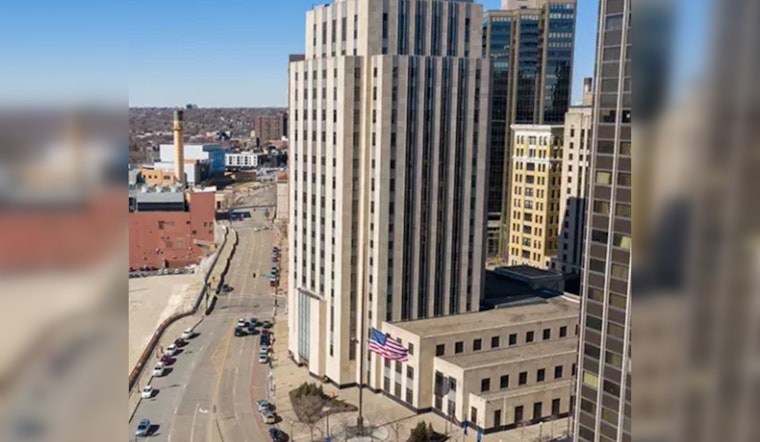
St. Paul's Board of Zoning Appeals (BZA) recently convened to deliberate on proposals that met with both approval and a withdrawal, evidence that community development is a live organism, hardly predictable, oft subject to the ebbing concerns of neighbors and the aspirations of applicants. In their latest session, documented on March 7th, several cases were presented, pivoting around the establishment of housing facilities and expansions beyond current zoning limitations, a routine dance of civic governance and urban evolution.
The BZA granted a unanimous nod to Amani Construction & Development for a variance allowing a significant increase in paved surface on a planned townhouse-style complex at 550 Brunson Street, according to meeting results posted on the City of Saint Paul, MN website. Whereas Khalid Samatar's vision for a supportive housing facility at 360 Sherman Street was retracted, addressing perhaps, the invisible yet palpable lines of comfort or concern drawn by the community or the drawing board's revisions.
Then there was Right Time Sober Living LLC, whose plan for a 16-person residence at 1070 Jackson Street was narrowly approved, despite falling short of the zoning code's spatial parameters for such facilities - an aggressive negotiation for those marginalized elements in our landscape, striving to find their place. This literal encroachment against zoning bylaws suggests a paradox of proximity and distance, how close is too close, and for whom does the bell of variance toll.
The basics of governance are made and remade in such meetings, brief moments where board members cast votes that echo in the corridors of the city, their decisions shaping the physical community and charting a course for those seeking to live within it. The BZA will reassess its agenda at the beginning of each hearing, further indicating the fluidity of urban discourse, which like any good story, is full of starts, stops, and the occasional need for a rewrite. Should one desire to attest to or participate in future hearings, public commentary is open at [email protected], though timing is key as the record stops short at 2:00 p.m. on the stated deadline; everything submitted post-mark is just dust in the wind.
The session closed as all civic rituals do: with an adjournment, a signal that the day's slice of the public record was complete, leaving the room, the board, and the communities they serve to anticipate the implications of the day's decisions, until the next convening when they gather to do it all over again.



