

























































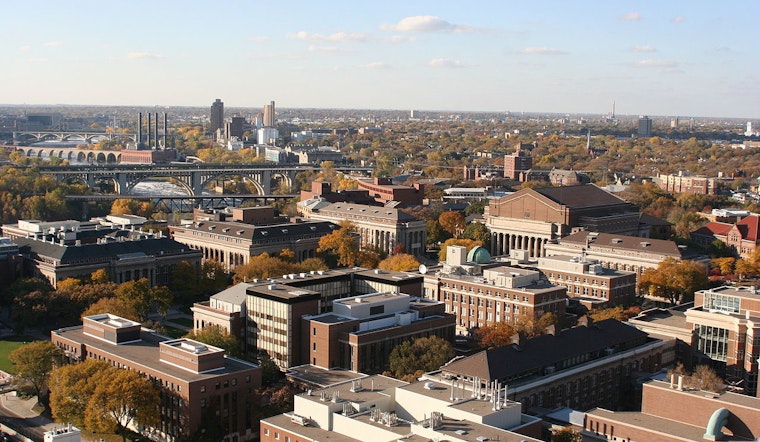
The University of Minnesota is celebrating the election of two of its scientists to the American Association for the Advancement of Science (AAAS) Fellows. According to details released from a University of Minnesota announcement, Carrie Haskell-Luevano and Douglas Allchin have joined the 2024 class of the prestigious society, which this year includes 471 members recognized for their contributions to science and society.
Haskell-Luevano, a professor in the College of Pharmacy, has made a name for herself through her research on G protein-coupled receptors. Her work has centered on their role in driving biological functions such as feeding behavior, pain, and obesity. It's her groundbreaking work in the field that appears to have likely to revolutionize the development of therapies for conditions including Type 2 diabetes and neuropathic pain. As part of this community of select scholars, Haskell-Luevano was commended "for distinguished contributions to the field of neuroscience, particularly understanding the role of melanocortin receptors in appetite/obesity and their potential as therapeutic targets," noted the University of Minnesota report.
Allchin's election to the AAAS as a Fellow also carries with it significant merit. His approach has bridged the history and philosophy of science with practical educational applications. Holding a position as a Resident Fellow at the Minnesota Center for the Philosophy of Science, Allchin has concentrated on the prevalence of error in scientific work—studying the processes by which mistakes are made and corrected. In addition to his research, he has developed a curriculum aimed at teaching students to navigate the nuances of scientific misinformation in media.
Such contributions to scientific understanding and education did not go unrecognized. Allchin was acknowledged for "pioneering work in introducing history and philosophy of science into the K-12 curriculum, and in preparing teachers for increasing the science literacy of their students." The AAAS award not only applauds individual achievement but also, according to AAAS CEO Sudip S. Parikh, as quoted in the same University of Minnesota article, "demonstrates the value of sustained investment in science and engineering," at a time where the future of science is riddled with uncertainties.
The University of Minnesota has expressed its pride through the words of its Executive Vice President and Provost, Rachel Croson. She extended her congratulations by noting that these scientists’ “research and collaborative efforts have generated important discoveries and improved all of our lives,” emphasizing the broad impact of their work. To view the full list of AAAS's newly inducted fellows, the University of Minnesota’s article directs readers to the official AAAS website.




