

























































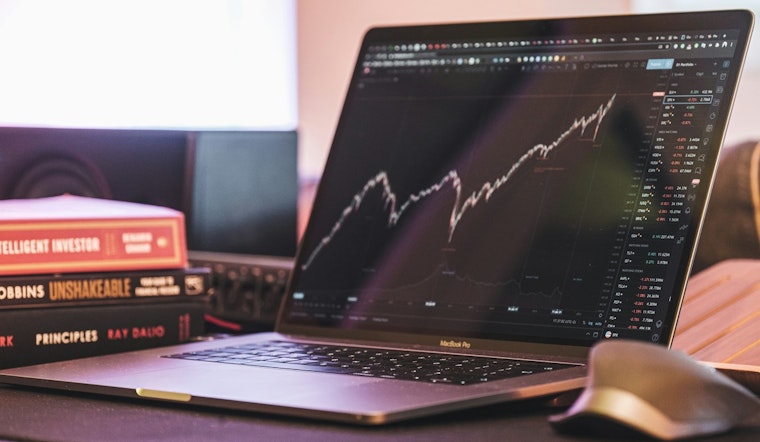
The Dow Jones Industrial Average continued its steep dive on Friday, dipping by an additional 2,231 points after a harrowing session the day before, marking a frightful week for investors. In response to President Trump's recent tariff policies, stock markets have been in a state of shock as the Dow skidded down 5.5%, as reported by ABC7 New York. This latest sell-off has further added to the heap as $6.4 trillion in market value was wiped out, sending the financial world reeling over just two days.
China's finance ministry announced imposing a 34% tariff on all U.S. imports, slated to come into effect on April 10. This move is widely seen to drastically escalate the trade war that has begun to deeply unsettle markets globally. The Nasdaq plummeted by 5.8% putting it firmly in bear market territory, now down more than 20% from its December peak, echoing the Dow's descent. In a statement obtained by The New York Post, Brian Jacobsen, chief economist at Annex Wealth Management, commented, "For investors looking at their portfolios, it could have felt like an operation performed without anesthesia."
Shares of major corporations with international supply chains, such as Apple, saw considerable declines, with the tech company’s stock falling 7.3%. The broader S&P 500 index also faced a rugged decline, ending the day down almost 6%. Across the ocean, international markets didn't fare much better, symbolized by Britain's FTSE 100 index taking more than a 1% hit at open, as per ABC7 New York. These developments have raised concerns about the long-term impacts on global trade and economic stability.
Federal Reserve chair Jerome Powel addressed the potential repercussions of the tariffs during an event in Arlington, Virginia, warning that "While tariffs are highly likely to generate at least a temporary rise in inflation, it is also possible that the effects could be more persistent." According to a New York Post interview, Ben Laidler, head of equity strategy at Bradesco BBI, said, "We're beginning to see the inevitable retaliation from the global trade partners of the United States. The risk is that this tips a recession scare into a full-blown recession."
The market trembles suggest far-reaching economic implications, prompting economists and analysts alike to warn of stagflation risks and potential moves to recessionary conditions. Bridgewater Associates' Ray Dalio cautioned about the impact of the tariffs in a chilling prediction to The New York Post, stating that they will be "significantly stagflationary in the US and significantly deflationary/recessionary in sanctioned countries." Meanwhile, the White House continues to urge investors to back the President's strategy, with press secretary Karoline Leavitt reaffirming the administration's stance on CNN: “This is a president who is doubling down on his proven economic formula from his first term… this is indeed a national emergency… and it’s about time we have a president who actually does something about it.”





