

























































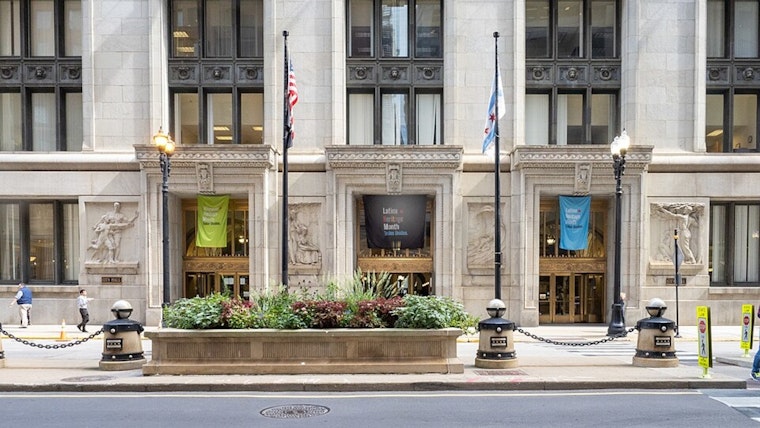
The landscape of Chicago's development continues to evolve, with a series of major planning and development measures recently approved by the City Council. In a nod to the city's diverse architectural and cultural heritage, a proposal spearheaded by Mayor Brandon Johnson seeks to recognize the former WAX TRAX! Records building as an official Chicago landmark. This building, situated at 2449 N. Lincoln Ave., was not just a purveyor of punk, new wave, and other music genres, but also a beacon of Chicago’s cultural scene until its closure in 1993, according to the City of Chicago.
Adding to the city's industrial landscape, a Cook County Class 6(b) property tax incentive has been proposed to lay the groundwork for the construction of a two-building industrial complex on the Near West Side. Expected to contribute to the creation of 20 full-time jobs once fully leased, the Kinzie Commerce Development's project, valued at $19 million, could replace outdated industrial structures on Fulton Street and Lake Street with state-of-the-art facilities. In an expansion of housing, the City Council has greenlighted the conversion of 12 floors of the historic Harris Trust and Savings Bank building into 345 mixed-income residential units, supported by up to $40 million in Tax Increment Financing and other incentives, as per the City of Chicago.
Similarly, the Council endorsed a project for repurposing five floors of the Continental and Commercial National Bank building into 168 mixed-income residential units, backed by up to $26 million in TIF assistance. The combination of these projects aims to address the underutilization of Loop area high-rises and infuse the market with at least 30% affordable housing options. Outside the realm of housing, the Sunshine Gospel Ministries is set to build a new Washington Park community center with city support, including land sold at a significant discount and a $5 million Community Development Grant.
Park facilities are not left out, as TIF funding has been secured for improvements at Piotrowski and Douglass Parks, with respective allotments of $8 million and $4.7 million aimed at upgrading and creating inclusive, all-weather recreational spaces. For a full rundown on the measures approved by the Chicago City Council, you can read details provided by the city's official press release.





.jpg)