

























































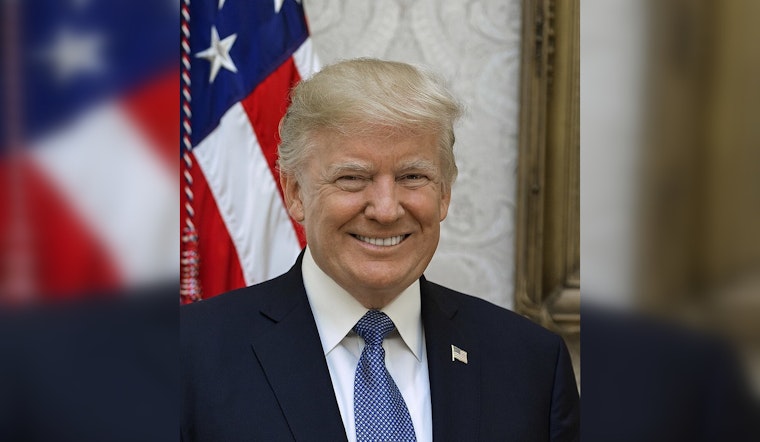
Massachusetts businesses are gearing up for financial turbulence following President Donald Trump's latest announcement of extensive tariffs that could send ripples across various industries. According to WCVB, the imposed tariffs are hitting goods imported from around the world, already causing the stock market to endure its worst performance since the onset of the COVID-19 pandemic in 2020, this new financial phenomenon is poised to surge the prices of a plethora of products ranging from wine and spirits to coffee and produce.
Local business owners are voicing concerns over the broad impact these tariffs will have on their operations and pricing structure. Jay Spencer, owner of the French Press Bakery and Cafe in Newton, told WCVB, "It's a massive impact, but more importantly, it's an unknown every day between eggs and coffee, chocolate, teas," highlighting the unpredictable day-to-day costs his business is facing. Similarly, Arpit Patel from Oak and Barrel indicated that seemingly domestic products like Corona and Modelo beers, which are technically imported, could see significant price hikes.
With the future of many local companies hanging in the balance, Robin Liss of the Cambridge-based Suvie Kitchen Robot is finding alternatives to avoid potential bankruptcy as her product, reliant on components manufactured in China, is now seeing a 54% increase in costs due to the tariffs. As she scrambles for solutions, she maintains a stance of support for American manufacturing, yet realistically acknowledges the challenges and time required to transition supply chains, "I think that's a great goal," Liss said to WCVB, "But if you're going to do that, we need to do it in an intelligent way, where the government works with companies to move these supply chains over bit by bit."
Amidst growing concerns, Babson College professor Peter Cohan told WCVB that these tariffs could lead to a cycle of decreased spending, economic decline and job loss, further underscoring potential threats to the economy; additionally, an analysis from Yale University's Budget Lab forecasts that the tariffs will cost the average household an additional $2,100 annually, with lower-income families shouldering over $3,000 in extra costs.
Reflecting these worries, the Greater Boston Food Bank expressed alarm over the Trump administration's cancellation of funds earmarked for the Massachusetts Emergency Food Assistance Program and the tariffs' broader impacts, as reported by NBC Boston.
Economists are forecasting that anything imported will bear the brunt of a 10% tariff, with automobiles and clothes from certain countries witnessing even higher rates. Boston University economist Tarek Hassan signified the scope of the issue while speaking to NBC Boston, stating, "What's coming is higher prices — higher prices in particular for things that you might find in Walmart and Target, sort of articles of everyday use." And with detailed eyes on the situation, economists remain on alert to see if any tariffs might be renegotiated or rescinded, which could then potentially stabilize or alter prices.





