

























































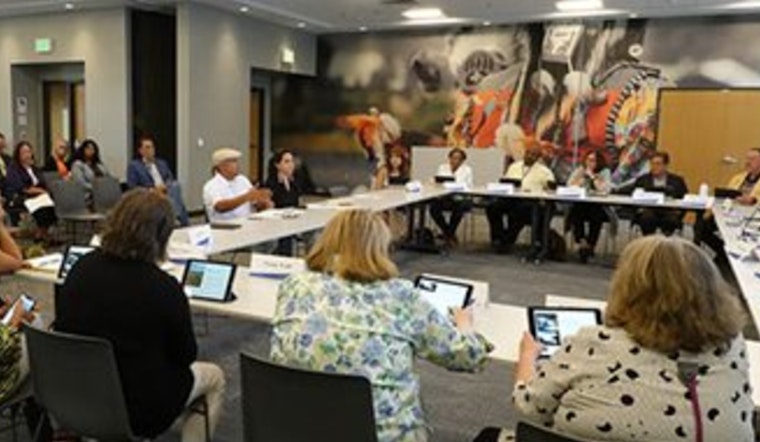
The Metropolitan Council has officially taken a step to openly acknowledge the ancestral lands of the Dakota Oyate by adopting a Land, Water, and People Acknowledgement, as reported by Metro Council's official news outlet on April 14th. This recognition is more than just words, as it also encompasses a series of commitments and actions aimed to respond to the adverse effects of settler colonialism and the displacement of American Indians. These initiatives have been integrated into Imagine 2050, the guide for regional development.
Not content to merely recognize the past, the Met Council is determined to also actively respect the sovereignty of Tribal Nations and address needs in areas like housing, water, and transportation policy. Met Council Chair Charlie Zelle shared his initial skepticism regarding the efficacy of land acknowledgments, but he was reassured by the solid commitments that accompanied this particular statement. "Words do matter, especially if they are backed up by actions and commitments," he stated in a Met Council meeting. The Council is aiming to not just pay tribute but also to build trust and relationships through action with the American Indian communities.
A statement by Robert Lilligren, White Earth Ojibwe and a Met Council member, encapsulates this sentiment: "Now we can go back to not just the Advisory Council, but to the community as well, and say, 'We heard you, we’re taking action. We’re doing what you asked us to do.' That is so fundamental to the relationship building and the trust building that is really necessary with all of our communities, of course, and with this community in particular." These words were obtained from the aforementioned Met Council article.
Alongside these declarations, the Met Council has set in place processes to ensure the Land, Water, and People Acknowledgement is consistently shared across various mediums and events. It is to be read before all Met Council business proceedings, incorporated into official plans, and included in new employee orientations. Allison Waukau, the Met Council’s Tribal Liaison and Native Communities Coordinator, outlined the intent behind the acknowledgment – to raise visibility for the American Indians residing in the region and to mark respect for the sovereign nations present. "When the Native community moves forward, all of us move forward," she said, further noting the acknowledgment would be a 'living document' subject to updates.
Notably, the effort extends into educational resources for employees, residents, and local governments and will also appear on a Met Council webpage dedicated to American Indian communities and Tribal relations. The inclusion of the acknowledgment in the Met Council’s procedures underscores a clear commitment to keeping this recognition an active and evolving part of the Council's ethos and practices. The multifaceted approach aims to ensure that the acknowledgment is not a mere formality but a guiding principle carried out in the council's day-to-day operations and long-term planning.




