

























































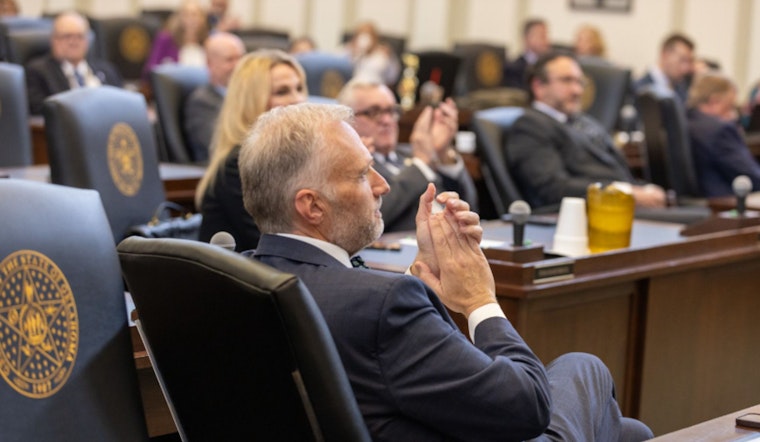
In a decisive move by the Oklahoma House, a bill aiming to dismantle discrimination against special needs students has sailed through with strong support. According to House officials, Senate Bill 105, championed by Rep. Chad Caldwell, R-Enid, intends to modify the Lindsey Nicole Henry Scholarships for Students with Disabilities Program by altering the conditions for eligibility, which previously set unequal standards for students with disabilities.
Under the existing rule, families have been contending with an obstacle that forced their children with special needs to stay in public schools for a year before qualifying for school choice funds, a requirement not imposed on traditional students; with the new bill, Caldwell says it "removes discriminatory barriers faced only by students with special needs or disabilities," giving families the flexibility to find proper accommodations that meet the specific needs of their children without the previous wait times. The bill eliminates the necessity for a student to have attended a public school district the year prior to applying for the scholarship program and corrects language regarding the parental revocation of consent to services under IDEA's provisions.
Senator Julie Daniels, R-Bartlesville, who carried the bill in the Senate, reinforced the bill's intention to "This legislation levels the playing field for families of children with disabilities or special needs," highlighting the issue of parents having to tolerate unsuitable educational settings due to an arbitrary year-long wait. The scholarship program permits parents or guardians of students with disabilities, served under the Individuals with Disabilities Education Act (IDEA), to choose for their child to attend a participating private school approved by the State Board of Education, which provides an LNH Scholarship; since its inception in 2011, the program has catered to roughly 1,500 students, Daniels mentioned.
With the passing of SB105 by a wide margin of 70-23 in the House, the bill not only allows more immediate access to the scholarship but also expands eligibility to include those on an Individualized Service Plan developed by the Department of Human Services, children relocated to Oklahoma due to military orders, those in out-of-home placement through Juvenile Affairs, or those in DHS's care or adopted under their custody. Funds from the scholarship are disbursed in increments directly to participating schools after students have already begun attendance, preventing any direct payment to parents. Following the House amendments, the bill now moves back to the Senate for final consideration, marking a significant stride towards equality in education for students with special needs.



