

























































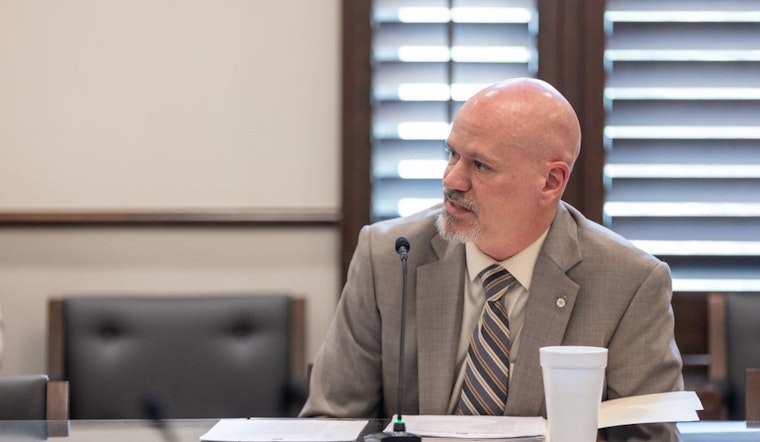
In a move that tightens the reins on gubernatorial powers during health crises, the Oklahoma House of Representatives has passed a bill setting stern criteria for business closures in pandemics. Announced on Tuesday, the legislation led by Rep. Kevin West, R-Moore, seeks to balance public safety with economic freedom, stipulating that scientific evidence must support any state directive to shut down businesses.
The bill, known as Senate Bill 672, dictates that the governor can only close businesses if there is clear scientific data pinpointing them as contributors to disease spread. As reported by the Oklahoma House of Representatives, this provides a dual safeguard: preserving public health while defending the right of businesses to stay operational unless proven otherwise. Equally, West argued, business closures in the COVID era sometimes lacked logical consistency—citing the closure of bars after 10 p.m. as a measure with seemingly arbitrary timing.
Emphasizing rights enshrined in the Oklahoma Constitution, such as the inherent right to life, liberty, and the enjoyment of the gains of one's industry, "I believe this bill threads the needle between everybody's rights," West said, as per a report by the Oklahoma House of Representatives. The bill does not strip the governor of all power but sets a bar for determining when a business should close—offering affected entities a chance to plead their case through a notice and a hearing.
Under this legislation, contact tracing and similar tools become critical in tracing sources of infection, as they are deemed capable of showcasing a business's link, or lack thereof, to a public health threat. Reflecting on Moore's own handling of the COVID-19 crisis, West pointed to the city's decision to let business owners and patrons make their own choices, which, still showing no signs of being a superspreader, led to unexpected revenue boosts as consumers from more restrictive neighborhoods poured into town.
Senate Bill 672 cleared the House Commerce and Economic Development Oversight Committee with a 14-3 vote, making it eligible to be considered on the House floor. If enacted, this legislation promises to redefine the balance between urgent public health measures and economic resilience in times of widespread contagion.





