

























































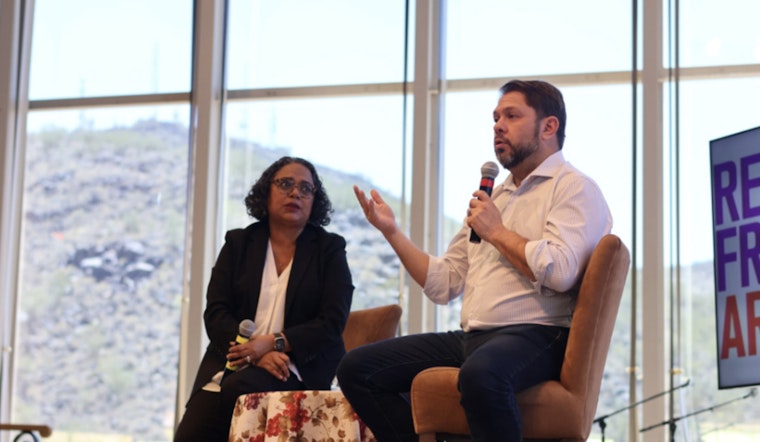
Senator Ruben Gallego took a firm stand in Phoenix, alongside Reproductive Freedom for All, drawing attention to the dire repercussions of proposed Republican-led Medicaid cuts on reproductive healthcare. At a town hall meeting, he laid bare the projected impact on low-income Arizonans' access to critical healthcare services.
"Women in Arizona deserve to have control over their own bodies. But Republicans in Congress want to strip access to reproductive care from poor women in order to give tax cuts to the rich. I’m doing these town halls across the state to hear from people who will be impacted from these cuts and to make clear that Arizonans won’t stand for it," Senator Gallego said, as mentioned in his press release. His town halls across Arizona mark an effort to raise awareness and rally opposition to the severe funding reductions.
In the US, Medicaid is a major provider of various health care services—it underwrites birth control, cancer screenings, and maternal health care, among others. Serving as the nation's largest payer of reproductive health care, it covers 42% of all births and underpins 75% of public expenditure on family planning.
"Congressional Republicans want to strip Medicaid from millions of Americans to fuel Donald Trump’s dangerous and deadly agenda. When Trump brags about his ‘big, beautiful bill,’ he’s not talking to working families—because Medicaid funds 75% of family planning services. And he’s not talking to parents, because Medicaid funds 40% of all births in the U.S.," Mini Timmaraju, President and CEO of Reproductive Freedom for All, was quoted during the town hall meeting, as reported by the Senator's Office. She applauds Senator Gallego for confronting these cuts head-on and engaging with Arizonans about the real-world consequences.
Following the passage of a Budget Resolution by House Republicans, which called for slashing $880 billion from the Medicaid budget, Senator Gallego has been vehemently opposing the cuts. He's taken his mission on the road, hosting Save Medicaid town halls not only in Phoenix—Arizona's capital—but also in Douglas and among the Yavapai Apache Nation to connect with locals directly affected.





