

























































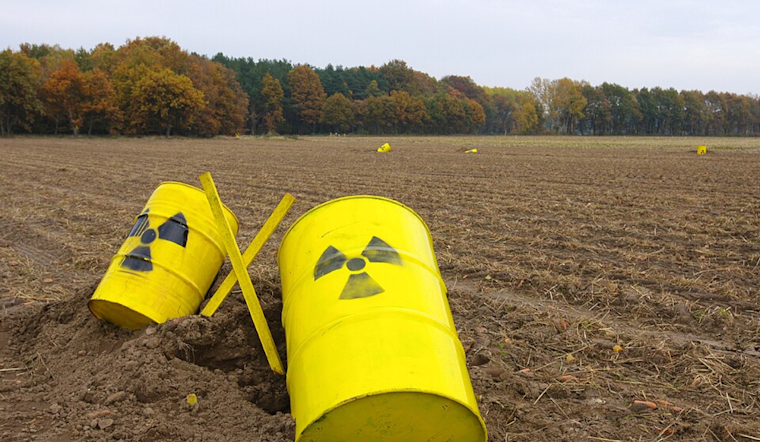
The United States houses approximately 90,000 tons of nuclear waste across more than 100 sites in 39 states, all generated from either the heyday of Cold War weapon-making or the country's 94 nuclear reactors. Amidst rising interest in nuclear power as a greener alternative to fossil fuels, the task of finding a secure, long-term repository for radioactive waste looms larger. In a recent development aimed at addressing this challenge, the U.S. Supreme Court heard arguments in March regarding the location of temporary storage for this waste, with a decision expected by late June.
An effort spanning decades has aimed to consolidate this waste at a single site, designated by a 1987 law as Yucca Mountain in Nevada. Yet, political and legal obstacles hobbled its progress, with funding ceasing in 2011. With no resolution in sight, the current storage methods will have to suffice. As reported by the Ohio State News, defense waste from nuclear weapon manufacturing is primarily kept in underground steel tanks at sites like Hanford, Washington, and Savannah River, South Carolina. Some of this waste, now immobilized in glass, resides in stainless steel containers, awaiting a more permanent solution.
The bulk of the U.S.'s nuclear waste issue, however, comes from the spent fuel of operational power plants. During their active years, uranium oxide pellets inside zirconium tubes fuel the fission reactions that generate energy. Once spent, these fuel rods spent time cooling in pools before being sealed in stainless steel canisters and placed in concrete vaults. As of December 2024, the U.S. had tallied over 315,000 bundles of spent nuclear fuel rods and more than 3,800 dry storage casks, all of which were guarded at current and former plant sites.



