

























































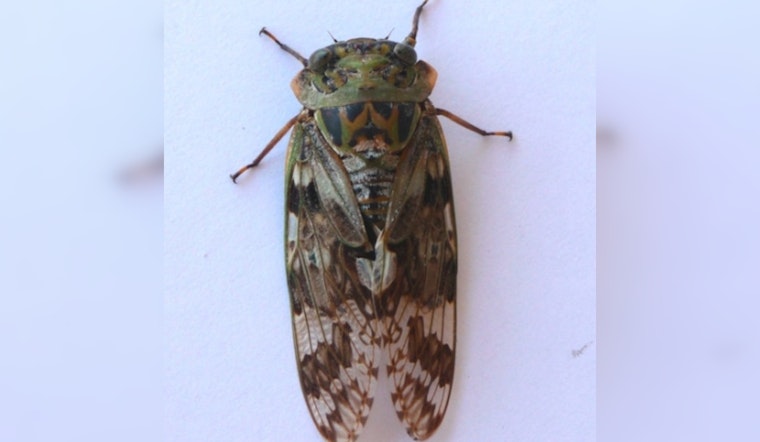
After seventeen years underground, cicadas have emerged on Cape Cod, appearing in areas like Falmouth, Mashpee, and even across the canal into Plymouth. According to 7NEWS, this emergence is limited to the upper Cape and has drawn interest from local naturalists and educators.
Researchers are using this event to study environmental conditions. Scientists from the Woods Hole Oceanographic Institution (WHOI), including assistant scientist Laura Motta, are testing cicadas for mercury levels. Although Motta typically studies mercury in ocean zooplankton, cicadas can also absorb environmental pollutants through the tree roots they feed on.
"The cicadas are a cool analogue of what happens out in the ocean," Motta told CBS Boston. This research is part of biomonitoring, which uses living organisms to assess environmental quality, particularly in relation to mercury pollution.
The cicadas are collected, cleaned, frozen, and ground into a powder for mercury testing. These results will be compared with previous baseline levels.
While cicadas do not sting or damage gardens, young trees may need protection with mesh or netting. They are known for their loud calls and appear in different species. Their emergence follows a regular cycle and is expected to repeat in another seventeen years.




.png)