

























































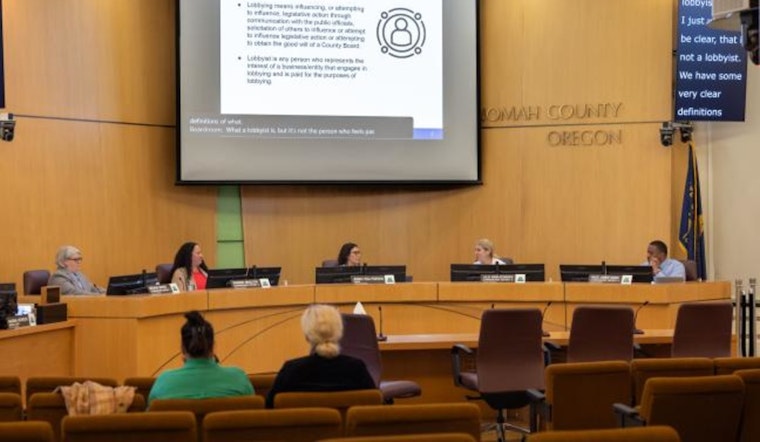
Following a push for increased transparency within Multnomah County government, the Board of Commissioners has unanimously passed a measure to regulate lobbying activities and bolster public trust. As first reported by Multnomah County News, the ordinance, approved on May 1, introduces the county's inaugural lobbying reporting requirements and enforces new rules that mandate Commissioners to make their official calendars public each quarter. The ordinance, set to take effect on July 1, 2026, will provide the necessary lead-up time to develop technology and inform stakeholders of the changes.
Driven by Commissioners Julia Brim-Edwards and Shannon Singleton, the legislation aims to ensure that elected officials act in the public's best interest. "County residents expect their elected officials to act in the public’s best interest and be good stewards of taxpayer dollars," Brim-Edwards stated in a county news release. The updates will require lobbyists to register within three business days after exceeding 10 hours of lobbying activity, and report expenses over $50 per quarter. Notably, the ordinance has undergone revisions, such as raising the reporting threshold from five to 10 hours and exempting individuals responding to information requests from the definition of lobbying activities.
Another component of the ordinance is the establishment of a "cooling-off period," which prohibits County officials from lobbying within the county for one year after their service ends. According to Multnomah County News, the ordinance also details enforcement measures for non-compliance, including fines not exceeding $500 and the potential for an appeal process within 30 days of receiving a notice of fine. Commissioner Brim-Edwards emphasized the focus on "proactive education" about the new requirements and the pursuit of compliance rather than punishment.
Implementation plans are already in development, with Chief Operating Officer Christopher Neal tasked with leading the assessment and development of the necessary program. "My team and I are ready to get to work immediately on a comprehensive assessment to look at what it's going to take to stand up and develop a successful and sustainable program," Neal explained. Aside from the future-oriented structure of the ordinance, there is tension in the present, as well, with the Board allocating $200,000 to kickstart the initial work, ahead of the FY 2026 budget process.
Concurrently, the Board is also scrutinizing its internal rules and procedures to further cement transparency within its governance. Proposals to update these procedures include making Board meeting agendas adjustable until adoption, and clarifying how members can add items to the agenda.





