

























































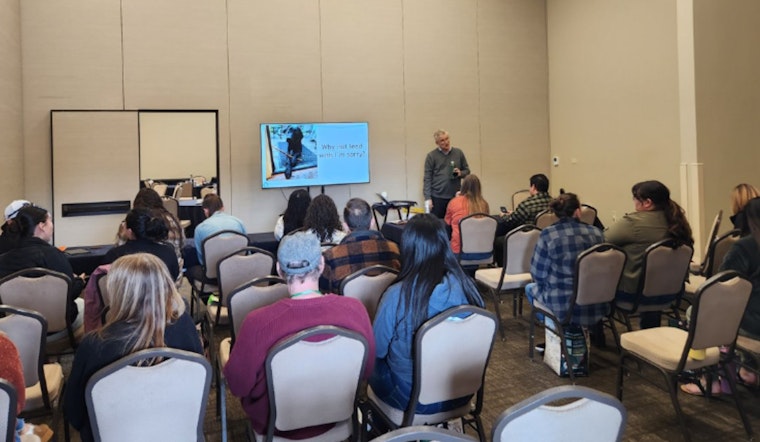
Oregon Housing and Community Services (OHCS) is rolling out trauma-based training for case managers working with the homeless, reaching over 450 partners across 26 rural counties. Alongside the Oregon Community Continuum of Care (OCCC), OHCS tapped trauma specialist Dr. Chris Wilson to educate service providers, acknowledging the complex interplay of trauma and overcoming homelessness with training focusing on empathy and understanding rather than just securing a roof overhead, as per an OHCS announcement.
Dr. Wilson's training underscores the altered brain chemistry in trauma survivors which can skew threat perception and impair decision-making, Crystal Rodriguez, a homelessness prevention coordinator at Klamath and Lake Community Action Services (KLCAS), said the training has already started demonstrating its effectiveness – noting that establishing trust remains a significant hurdle; when service providers understand that the inability to trust or use support can stem from deep-seated trauma responses, they can adjust how they aid those in need, fostering a relationship that engenders trust over time.
Despite securing housing, adapting to stability can prove challenging reflects Kenzie Bispham, the homeless prevention team lead at KLCAS, a client house yet still returned to sleeping in their car, revealing deep-rooted habits ingrained by years on the street and yet trauma-informed training equips staff to view such behaviors as signs of underlying trauma working towards building trust and ultimately aiding the process of acclimatization to a new and stable living situation.
Brooke Matthews, the Balance of State Oregon Community Continuum of Care program manager at Community Action Partnership of Oregon (CAPO), shared an insightful anecdote about consistent, no-pressure engagement leading to a breakthrough with a formerly unreachable individual, "We had a person who wouldn't even talk to us, we kept showing up with water and snacks, saying, 'There's no pressure.' After months of consistency he came in and asked for help, he's now been stably housed for nearly two years," she told OHCS.
The benefit of this training initiative OHCS insists, extends beyond individual agencies creating a statewide ripple of case managers equipped with trauma-informed understanding, a transferable skillset that remains irrespective of job change. "This isn't just about helping one agency or community action group, we're creating a statewide foundation of trauma-informed individuals. Even if someone changes jobs, they carry that mindset with them wherever they go," Matthews emphasized in her statement obtained by OHCS.





