

























































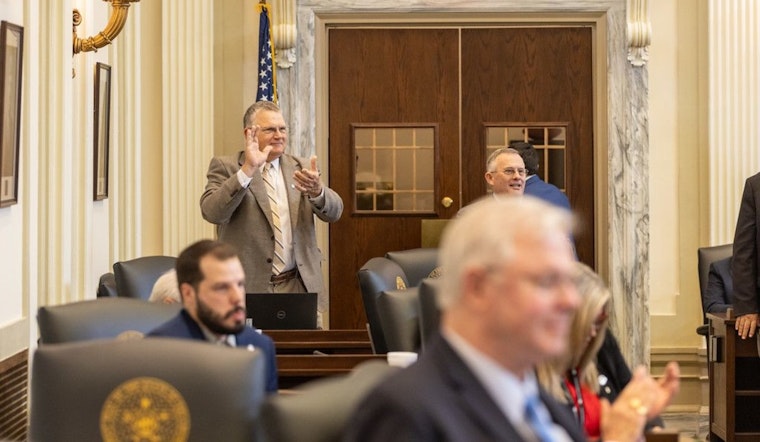
In a move hailed by local agricultural interests, Oklahoma's governor has sanctioned House Bill 1126 into law, a legislative step aimed squarely at bringing clarity to the retail food landscape. As reported by the Oklahoma House of Representatives, the new law demands a clear demarcation between traditional meat and its manufactured alternatives.
Authored by Rep. Jim Grego and Senator Roland Pederson, the bill mandates transparent labeling for protein products that are not direct products of animal slaughter. These include cell-cultivated, cultured from labs, or derived from plant or insect proteins. "I wish to thank Governor Stitt for signing House Bill 1126 into law," Grego commented, expressing his stance that the law will protect consumers from potential misunderstanding, as well as offer some shield to beef producers against the burgeoning alternative protein market. He further assured, if consumers opt for these products, "there should be no doubt as to how they were produced."
The legislative journey of House Bill 1126 found its anchor in the notion of "truth in labeling" – a standpoint shared by both its authors. Senator Pederson, speaking to the need for transparency and consumer protection, said, "This law is about truth in labeling, transparency, and ensuring that consumers are not misled by deceptive advertising." The implication of the new act is twofold: protecting the robust meat industry in Oklahoma and ensuring shoppers can make informed food choices.
This isn’t just rhetoric; there are teeth to these new regulations. The Oklahoma Department of Agriculture, Food and Forestry bears the investigative authority to follow up on credible claims of false advertising or misbranding. Retailers caught in violation, could find themselves charged with a misdemeanor. And in this framework, the onus to prove compliance lies heavily on the manufacturers, not the retailers Grego said. As the law comes into effect on Nov. 1, questions linger about its impact on the marketplace and consumer choice – but what's certain, is that Oklahoma's meat identity just got a legal reinforcement.





