

























































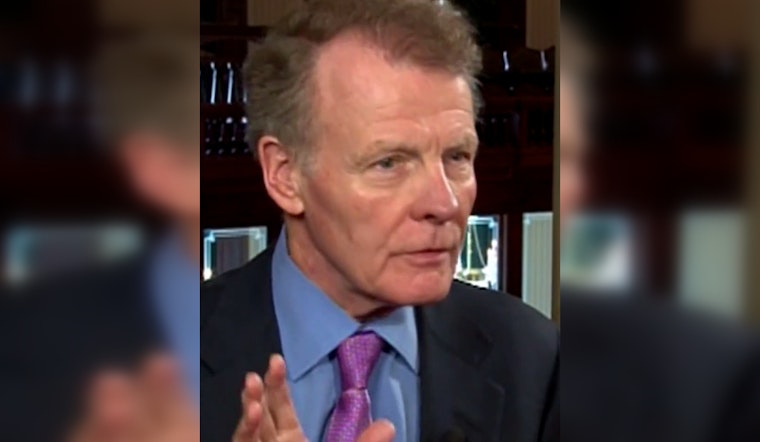
Federal prosecutors have called for former Illinois House Speaker Michael Madigan to serve 12 ½ years in a federal prison, in a sentencing memo filed on Friday. Described as someone who exploited his power for personal gain, Madigan's activities have been painted as a serious affront to the integrity of public service. According to the Chicago Sun-Times, the prosecution condemned Madigan's alleged lack of candor, claiming he prioritized his self-interest over honesty when on stand during his trial.
The 83-year-old Madigan faced conviction in February on charges of bribery and conspiracy with ComEd. He's now awaiting a June 13 sentencing that prosecutors insist should result in substantial incarceration time and a possible fine of $1.5 million. This recommendation is similar to previous cases of high-ranking officials in Illinois, aiming to serve as a deterrent. In a related case, former Ald. Edward M. Burke received a seemingly lenient two-year sentence, contrary the a ten-year recommendation by prosecutors, as detailed by WGNTV's article.
The prosecution's argument spotlights the damage Madigan's actions have done to the political fabric of Illinois. As the Chicago Sun-Times reports, Assistant U.S. Attorney Sarah Streicker in her memo to the court wrote, "Time after time, Madigan exploited his immense power for his own personal benefit by trading his public office for private gain for himself and his associates." This portrait of Madigan starkly contrasts with his defense's plea for probation and home detention, resting on the claim that his trial testimony was truthful.
Aspects of Madigan's conduct that prosecutors highlighted include his approach to technology. They argue that his avoidance of direct, personal communications through email or his own cell phone represented an effort to shield himself from interception, a common thread in the prosecution of public officials. These details, perhaps, mirror sentiments of a community well-versed in the shadows of political machinations. Despite such accusations, there are still those in government who support Madigan, ignoring the "evidence of his illegal conduct presented at trial and his 10 counts of conviction," as stated in the prosecutors' memo obtained by the Chicago Sun-Times.
The fallout from this case continues to reverberate throughout Illinois' political landscape, raising questions about the extent of corruption and the potential effectiveness of heightened legal repercussions for deterrence. With the June hearing date set and Madigan preparing for his fate, he represents the latest figure in a line of Illinois politicians whose alleged misdeeds have come under the intense scrutiny of both the judicial system and a wary public.





