

























































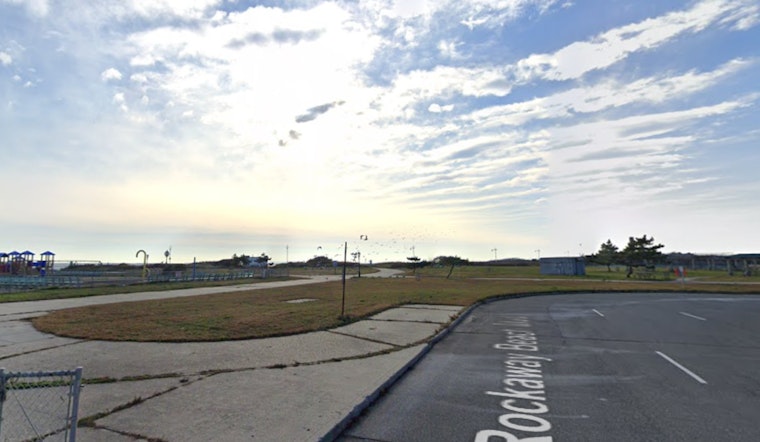
The summer outlook for beachgoers at Jacob Riis Park in Queens is looking bleak as a dangerous stretch of shoreline is poised to remain closed. Persistent erosion has turned an area of the park into an "extremely hazardous" zone, as designated by the National Parks Service. Last year, two teenagers and a surfer tragically lost their lives in this vicinity, a sobering testament to the perilous conditions exacerbated by visible wooden pilings, remnants from a bygone era of nearly a century past.
Rip currents, the hidden aquatic traps known for their peril to even seasoned swimmers, have been tied to the ongoing beach erosion by experts. Despite a costly attempt to fortify the beach with 360,000 cubic yards of sand at a steep price of $12 million, the Army Corps of Engineers watched as the sea undid their work, relentless in its natural course. With confirmed reports from the Army Corps that no sand replenishment plans are in the pipeline, a local surfer, Walter Rodríguez Meyer, caught on the infamous "sticks," urged for their removal, telling Gothamist, "They're not contributing anything ecologically, and they're certainly not doing anything for the city and public health."
The erosion's impact extends beyond water safety; it also affects the local infrastructure, as seen in the delayed $2.7 million refurbishment of the walkway adjacent to the historic, 92-year-old bathhouse. In stark contrast, city-managed beaches are undergoing prompt sand redistribution efforts whereas Jacob Riis Park suffers from neglect, an observation shared by Carl Quigley, a former aquatics director, who ominously commented on the rising water levels portending another summer closure.
As adjacent city-owned shorelines see structural reinforcement through the construction of jetties designed to curtail sand displacement, unintended consequences occur on federally managed Jacob Riis Park. Dr. John Fletemeyer, of the Aquatic Law and Safety Institute, highlighted to CBS New York the paradoxical nature of these efforts, stating, "You have beach accretion, the building up of sand, on one side of the jetty or groin and then erosion on the other side." The National Park Service has signaled active pursuit of beach preservation options, a glimmer of hope for long-time beach aficionado Bonnie Siegel, who lamented the steady decline of the sands of her youth.





