

























































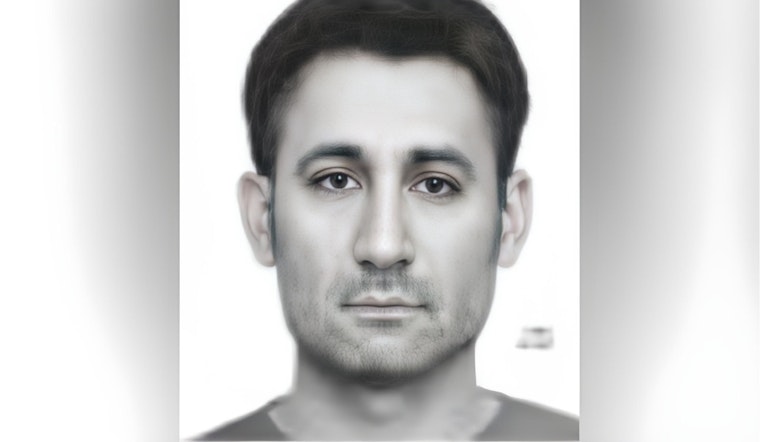
Three decades after human remains were discovered during golf course construction in eastern Tarrant County, officials are making a renewed push to identify the victim using advanced forensic artist rendering technology.
The Tarrant County Medical Examiner's Office released a new forensic rendering on June 24, 2025, depicting what investigators believe the unidentified man may have looked like. The image represents the latest technological advancement in a case that has puzzled authorities since workers discovered a human skull on May 30, 1995, while clearing land for a new golf course.
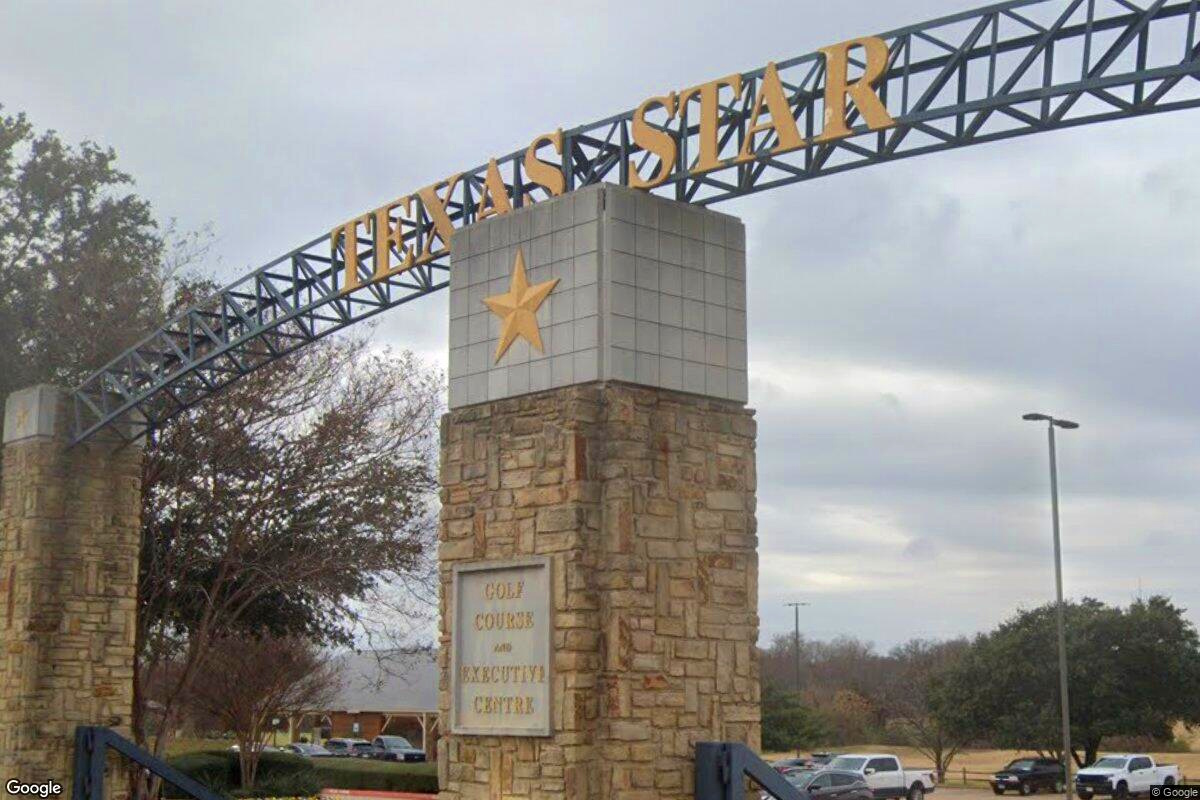
A human skull was found during the excavation for the Texas Star Golf Course in Euless, Texas in 1995
Source: Google Street View
Discovery and Investigation Details
According to FOX 4 Dallas, the victim's skull was initially found in the 3800 block of Highway 157. Additional skeletal remains were later located at 11700 Mosier Valley Road, in a field north of the original discovery site. DNA testing confirmed that all remains belonged to the same individual, creating a comprehensive picture of the victim's physical characteristics.
Forensic analysis indicates the individual was a man between 30 and 44 years old, possibly Hispanic or white, standing between 5'7" and 6'1" tall. Investigators believe he died between 1990 and 1994, as reported by county records. Notably, the man's torso, one or both limbs, and one or both hands were not recovered, adding to the complexity of the identification process.
Technological Advances Drive Renewed Hope
The case represents part of a broader trend in forensic science where technological improvements are breathing new life into decades-old investigations. Christian Crowder, chief of the Human Identification and Anthropology Laboratories at the Tarrant County Medical Examiner's Office, previously told KERA News that advanced methods allow investigators to "reinvestigate some of these skeletal cases, which tend to be the more challenging cases."
The Tarrant County Medical Examiner's Office serves a region of approximately three million citizens across Tarrant, Denton, Johnson, and Parker counties. The office operates sophisticated forensic capabilities including in-house forensic anthropology services—the first such program in Texas—along with advanced DNA analysis and fingerprint examination facilities.
National Context of Unidentified Remains
This case illustrates a significant nationwide challenge facing medical examiner offices. According to NamUs statistics, approximately 4,400 unidentified bodies are recovered annually across the United States, with roughly 1,000 remaining unidentified after one year. Medical examiner and coroner offices reported holding 11,380 unidentified remains as of 2018.
Texas specifically faces substantial challenges with cold cases, as the Texas Attorney General's Office reports over 270,000 unsolved homicides statewide as of 2020. The state created a Cold Case and Missing Persons Unit in March 2021 to assist law enforcement agencies with these investigations.
Recent Advances in Forensic Identification
The Dallas-Fort Worth region has seen notable successes using modern forensic techniques. In March 2024, Dallas County achieved its first murder conviction using investigative genetic genealogy, solving a 1986 cold case. Similarly, Fort Worth police have successfully utilized DNA techniques to solve cases dating back to the 1970s.
The Tarrant County Medical Examiner's Office has actively pursued federal grants to fund forensic genetic genealogy testing for difficult cases. While expensive and requiring outside laboratory services, these advanced techniques provide "a broader net" for identifying unidentified remains by connecting them to potential family members through publicly available genetic databases.
The Human Impact
For investigators like Crowder, these cases represent more than forensic puzzles—they represent people whose families deserve answers. "There's no one else out there who's going to do it except for us," Crowder told KERA News. "And it's that ownership that we have to take of these people who don't have a voice and we need to speak for."
The case has been entered into the National Missing and Unidentified Persons System (NamUs) under case number 3731, making it searchable by families nationwide who may be looking for missing relatives from the 1990s era.
Why This Story Matters Now
Thirty years after the initial discovery, this case exemplifies how persistence and technological advancement can offer new hope for resolution. The release of the forensic artist rendering in June 2025 represents a critical juncture where cutting-edge visualization techniques may finally provide the breakthrough needed to return this individual to his family.
Anyone with information that might help identify this individual is urged to contact the Tarrant County Medical Examiner's office at 817-920-5700, extension 8512, and reference case number 95280958.





