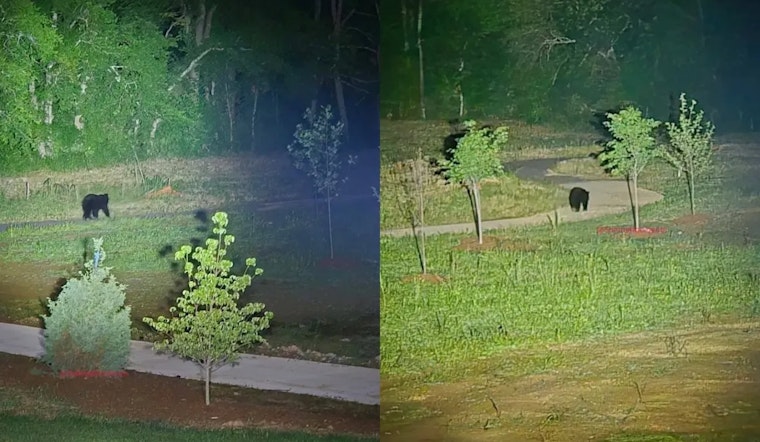
A black bear, apparently the same individual seen around Gallatin, Tennessee, was hit and killed by a vehicle on Vietnam Veterans Boulevard, according to reports yesterday. Officers from the Tennessee Wildlife Resources Agency (TWRA), along with the Gallatin Police Department, responded to the scene, following up on reports of the bear's encounters from the previous week. The TWRA removed the bear's remains, which were found on Highway 386 between Big Station Camp Blvd. and Green Lea Blvd., as reported by WSMV.
The TWRA stated that it is common for bears to leave their mothers around this time to establish their territories and that they were monitoring the situation. According to FOX17, the agency does not normally relocate a bear "unnecessarily" and cited University of Tennessee and Great Smoky Mountains National Park research indicating that 90% of relocated bears die, often while endeavoring to return to their original territories or in search of food in unfamiliar areas.
Reinforcing these concerns, the TWRA has highlighted the perils of relocation for these animals, stating "The odds a bear will be hit by a vehicle within a year after relocation is 15.4 percent, which is higher than bears residing in their home range," as shared in WSMV's coverage. The previous year saw 132 bear deaths from vehicle collisions, an alarming figure that prompts consideration of our growing intersections with wildlife habitats.
In light of increasing bear activity in Middle Tennessee, the TWRA encourages locals to adhere to BearWise guidelines for safely coexisting with bears. The agency's protocols for tranquilizing and relocating bears are reserved for specific circumstances, such as bears attacking humans, stalking, causing property damage, entering buildings or vehicles, habituating to non-natural foods, or refusing to leave in the presence of humans. These guidelines aim to address immediate safety concerns while considering the well-being of the bears, as reported by 3B Media News.