

























































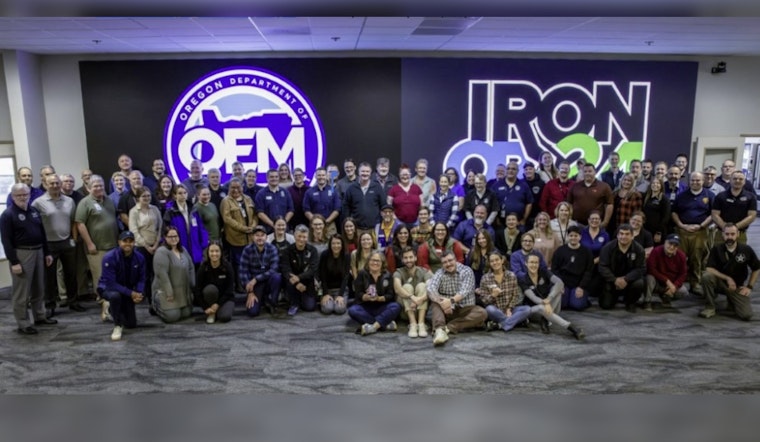
The Oregon Department of Emergency Management (OEM) is hitting a three-year milestone as an independent state agency, focused on enhancing Oregon's approach to emergency preparedness, response, and recovery initiatives. Since its establishment on July 1, 2022, OEM has not only deepened its collaborative efforts with various local, tribal, state, and federal partners but also has introduced state-of-the-art initiatives that aim to prepare Oregonians for a variety of potential disasters, according to a press release from the OEM.
Indeed, a standout achievement for OEM has been the rollout of the Be2Weeks Ready toolkit, which is available in five written languages and American Sign Language. This toolkit serves as a resource to help residents maintain self-sufficiency for at least two weeks in the event of emergencies; furthermore, by integrating the Statewide Interoperability Coordination (SWIC) Team into its operations, OEM has enhanced the state's ability to sustain vital interoperable communication systems during public safety crises and coordinated disaster responses. The expansion of emergency stockpiles and logistics through the State Preparedness and Incident Response Equipment (SPIRE) grant program ensures resources like generators and portable water systems are on hand when communities are in need, as mentioned in the same press release.
OEM has also focused on advising through the establishment of the Local Government Emergency Management Advisory Council (LGEMAC) and the Emergency Preparedness Advisory Council (EPAC), both created by House Bill 2927 and set to sunset in 2030. These councils provide guidance on preparedness strategies and develop policies for disaster planning and coordination. Despite challenges, such as the cancellation of FEMA's BRIC grant cycle in 2024, the department continues its support for local projects by administering several state and federal grant programs and recently introducing the SCRC program to fund local emergency response and recovery, as stated in the OEM announcement.
Strategically planning for the future, OEM has laid out various plans that stick to a whole-community approach - their Strategic Plan encompasses modernization and resilience, the IT Strategic Plan (2025–2027) targets digital improvements for emergency communications and data integration, and they place infrastructure protection at the center of their Homeland Security Strategy (2025–2028) while ensuring through their Inclusion, Diversity, Equity, and Accessibility (IDEA) Plan (2024–2026) that emergency management strategies remain equitable and inclusive for all Oregon's diverse communities. "Oregon has faced many challenges—wildfires, floods, winter storms—and through it all, our team has stayed focused on one mission: helping Oregonians stay safe, informed, and ready," OEM Director Erin McMahon expressed in the agency's recent announcement. OEM pledges to perpetuate its work in building partnerships and devising long-term strategies that emphasize equity, innovation, and community-driven resilience, ensuring every Oregonian is prepared and supported.





