

























































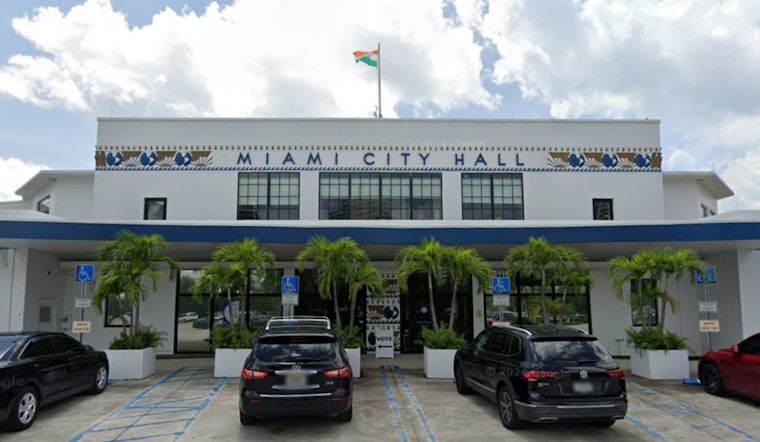
Miami City commissioners voted Thursday to postpone the city's November election until 2026, extending their own terms by a year in a controversial move that has sparked fierce opposition from Florida's top state officials and multiple mayoral candidates. The 3-2 decision transforms Miami from an odd-year to even-year election cycle, ostensibly to boost voter turnout, but critics are calling it an illegal power grab.
Commissioners Defy State Warnings
The measure, sponsored by Commissioner Damian Pardo and approved by Commissioners Ralph Rosado and Christine King, passed despite stern warnings from Florida Attorney General James Uthmeier, NBC Miami reported. Commissioner Joe Carollo and Miguel Angel Gabela voted against the proposal. Uthmeier had warned the city could not move the date without voter approval in a ballot referendum, writing that attempting to change election dates "by a simple vote by the Miami City Commission alone would clearly circumvent the terms of the County Charter," per WLRN.
Governor Ron DeSantis amplified the criticism on social media, stating he anticipated "swift, legal action" when this "scheme" is enacted, WSVN noted. The governor characterized the move as wrong for incumbent politicians to "cancel elections and unilaterally extend their terms in office."
Legal Precedent in Dispute
The controversy centers on competing interpretations of Florida law regarding municipal election dates. City Attorney George Wysong cited a North Miami precedent, upheld by the Third District Court of Appeals, allowing such changes via commission vote, CBS Miami detailed. In that case, Circuit Judge Reemberto Diaz ruled in May 2023 that the statutory language authorized municipalities to change election dates by ordinance without voter approval, Yahoo News found.
However, Uthmeier argued that due to the Miami-Dade Home Rule Charter, which protects localities from state preemption, the county's rules requiring a referendum supersede Florida's general statutes, Florida Politics learned. The attorney general warned his office would "consider taking all available actions" to prevent the change from taking effect.
Political Ramifications and Term Extensions
The postponement benefits several term-limited officials, most notably Mayor Francis Suarez and Commissioner Joe Carollo, who would receive an extra year in office, confirmed by Florida Politics. Ironically, Carollo voted against the measure despite personally benefiting from it. "I voted against it because, first of all, I believe what the attorney general of Florida stated that it's illegal, but even if it wasn't, it's morally wrong," Carollo told WSVN.
The timing also affects potential candidates. Frank Carollo, Joe Carollo's brother and a former commissioner, had declared candidacy for his old District 3 seat, WLRN documented. The delay complicates potential challenges to lifetime term limits that commissioners also plan to implement.
Mayoral Candidates Condemn Move
The decision has drawn sharp criticism from the field of 18 candidates already registered for the November elections. Former City Manager Emilio Gonzalez called the decision "an illegal act (that) will not stand," describing it as a power grab that disenfranchises voters, Florida Politics stated. Miami-Dade County Commissioner Eileen Higgins, also running for mayor, said the decision "highlights the dysfunction in our government," WLRN obtained while former Commissioner Ken Russell threatened legal action.
Mayoral candidate Michael Hepburn had previously threatened to sue the city if it rescheduled its election, setting up multiple potential legal challenges, Florida Politics revealed.
Voter Turnout Arguments
Proponents argue the change would dramatically increase participation in city elections. Pardo cited voter turnout jumping from 10-15% to 65-70% when elections align with federal contests, WLRN indicated. A recent District 4 special election saw only 11% turnout, reinforcing arguments about low participation in off-year voting.
Commissioner Ralph Rosado, who voted for the measure, noted that special elections and off-year elections typically see "approximately 10% turnout, maybe 15% on the high end," NBC Miami observed. However, Carollo countered that December runoff elections under the new system could result in even lower turnout than current levels.
Similar Cases Across Florida
Miami joins other Florida municipalities that have shifted to even-year elections. North Miami moved its elections from May 2023 to November 2024 in December 2022, while Coral Gables voted in May 2025 to move their elections from April of odd years to November of even years, Ballotpedia cited. The change would make Miami the 40th of the 100 most populous U.S. cities to hold even-year elections.
However, nearby Coral Gables has seen its own controversy, with Commissioner Melissa Castro filing legislation to reverse a similar decision and contacting Uthmeier's office for a legal opinion, Florida Politics discovered.
Financial and Legal Implications
Pardo argued the change would save Miami over $1 million and prevent legal challenges potentially arising from term-limited candidates winning seats simultaneously with lifetime term limit ballot initiatives, Miami New Times confirmed. The city attorney expressed confidence the ordinance would withstand legal challenges, but the state's aggressive opposition suggests prolonged litigation ahead.
The immediate financial implications include potential legal costs as the state prepares to challenge the ordinance. Uthmeier's office has reserved "the right to consider taking all available actions to prevent this violation of law from occurring," Local 10 disclosed.




