

























































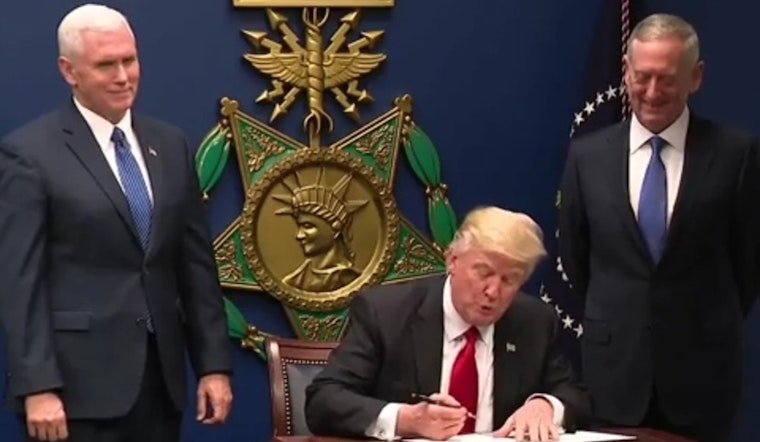
In a sweeping move that has rippled through communities across the United States, President Donald Trump has declared a travel ban impacting 19 countries, citing concerns over national security and the threat of terrorism. The executive order, announced on Wednesday, targets a mixture of African, Middle Eastern, and Latin American nations, with Afghanistan, Burma, Chad, the Republic of the Congo, Equatorial Guinea, Eritrea, Haiti, Iran, Libya, Somalia, Sudan, and Yemen facing full travel restrictions, while Burundi, Cuba, Laos, Sierra Leone, Togo, Turkmenistan, and Venezuela are subjected to a partial ban.
Reacting to this latest directive from the Trump administration, Senator Zaynab Mohamed of Minneapolis—herself a member of the Somali-American community—has issued a scathing condemnation. According to the Minnesota Senate DFL, "Donald Trump’s attempted ban on foreign travel from many countries is a predictably disgusting act from a man whose administration and politics is rooted in racism, fear and hate." The senator's critique extends to what she perceives as the targeting of nations predominantly composed of African, Muslim, Latin American, or Black populations, many of whom have established significant immigrant communities in the United States, including her own in Minnesota.
Senator Mohamed, representing the thousands of Somali-Americans in her state, highlights the disruption this ban brings to families with connections divided by the travel restrictions, expressing concern for the well-being of these communities in light of the discriminatory order. She charges Trump with painting hundreds of millions of people, and by extension, their American compatriots as threats—all of whom contribute to various aspects of American life as care providers, entrepreneurs, civil and public servants, teachers, parents and neighbors.
Mohamed further criticizes the freezing blanket cast over individuals and families in the process of legally immigrating to the U.S., who are now stalled in their pursuit to one day become American citizens. "Trump's discriminatory order puts a freeze on those individuals and families who have initiated the proper, legal pathway to coming to America and someday joining us as fellow citizens," she noted, articulating a sentiment of frustration over the halted dreams of many affected by the policy. Recalling the public's resistance to similar policies in 2017, she called for a renewed show of opposition to what she views as a hateful directive from the administration, declaring that "America’s strength lies in its unity, acceptance and openness."
The travel ban has reignited debates over national security and human rights, recalling previous instances of travel restrictions under the Trump presidency. The reverberations of the ban are likely to be felt in courtrooms, airports, and protest marches as a nation grapples with the implications of such sweeping restrictions on international movement.





