

























































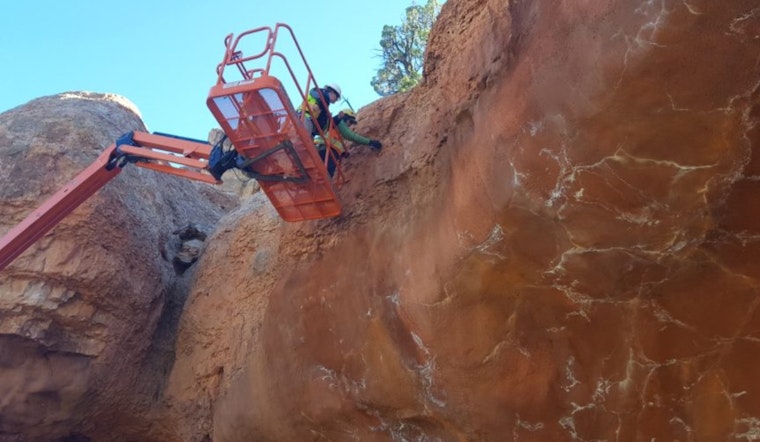
The Utah Department of Transportation is taking high-tech to historic heights with its latest initiative to preserve the Red Canyon Arches – twin natural landmarks that have defined the entrance to what is now Bryce Canyon National Park since 1925. Employing drones and LiDAR, a laser-based scanning technology, UDOT aims to prevent erosion and damage to the arches, which also directly impacts State Route 12 below.
In a project that started four years ago, UDOT has been actively monitoring the structural integrity of these arches. Using a combination of drones and stationary LiDAR, they have been able to gather extensive data, transforming thousands of 2D images into 3D models, and capturing detailed scans to identify potential weaknesses or changes in the arches' structure. The data collected, which also tracks rockfalls and deformations, is critical, especially in light of a major collision in 2019 and subsequent minor incidents that caused damage to the structures and their protective layer of shotcrete.
According to UDOT, additional funding secured this spring will usher in the second phase of the preservation project. This phase involves the installation of new sensors within the arches, supplementing or replacing the earlier ones that have either been damaged or have fallen short in effectively gathering data.
UDOT Region Four Director Kirk Thornock underscored the significance of the arches and the department's responsibility, stating, "These archways are icons in our state, and we want to make sure we’re doing what we can to preserve them for the future," as per UDOT. He highlighted the intention to let families, tourists, and locals continue their engagement with Utah's natural splendors sustainably. The approach UDOT is taking leans into proactive infrastructural stewardship, hoping to avoid costlier reactive measures that can spike taxpayer burdens and threaten the arches' long-term durability.





