

























































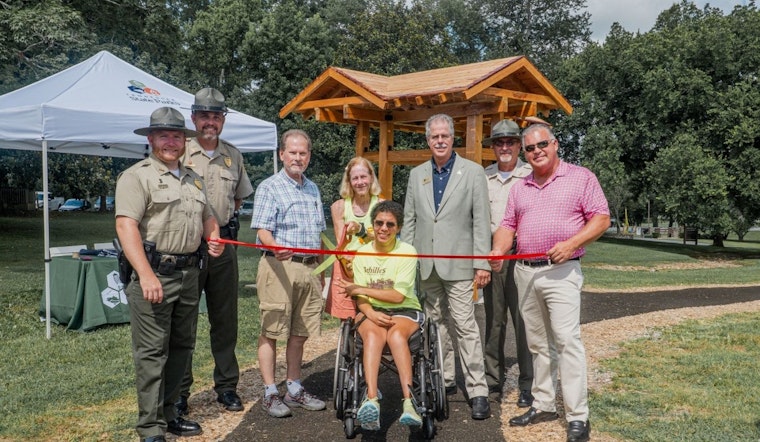
Hikers and outdoor enthusiasts in Tennessee have a new reason to celebrate, as Henry Horton State Park just unveiled a new universally accessible greenway. This state-of-the-art 1.5-mile trail not only offers scenic views and access to the Duck River, but it's also packed with a variety of amenities designed to engage visitors with the local ecosystem and history. According to the Tennessee Department of Environment and Conservation, the greenway features pollinator gardens, native grass fields, and even the gravesite of former Gov. Henry Horton, for whom the park is named.
The construction of this greenway was a multi-year project, running a total cost of $360,000, funded by grants from the Tire Environmental Act Program and the Recreation Trails Program, as well as in-kind labor from the park itself. The newest feature stands to further reinforce the reputation of Tennessee State Parks as the most accessible in the nation. Parks officials, in a spirited move to readily engage with the community, held a kick-off event for the Duck River Outdoor Expo, an annual conservation and education event dedicated to the Duck River.
The accessible trail's surface intricately incorporates 125,000 lbs. of crumb rubber, equal to about 6,220 passenger tires sourced from within the state, thanks to the environmentally savvy Tire Environmental Act Program. This program cleverly finds ways to repurpose scrap tires into beneficial uses such as this. The Recreation Trails Program, which provided additional funding, is recognized for supporting land acquisitions for trails, their maintenance, and restorative efforts. This program has endorsement at the federal level and administration at the state level, reflecting a collaboration of stewardship efforts from multiple fronts.
A historical touch to the park enhancements includes the addition of a replica millwheel, funded by a $20,000 grant from General Motors to the Friends of Henry Horton. The millwheel, originally hailing from the Tennessee State Museum, was reconstructed near the park's Visitor Center to embody the type of fixture that would have graced the Duck River in the 19th century. "The General Motors grant also went toward interpretive signage and helped in acquiring documentation about the Wilhoite Mill, which operated for nearly 100 years," as per the Tennessee Department of Environment and Conservation. The project combines historic preservation with modern recreation to appeal to a wide range of park visitors. "This is quite a week for Henry Horton State Park," declared Greer Tidwell, deputy commissioner of Conservation for the Tennessee Department of Environment and Conservation.




