

























































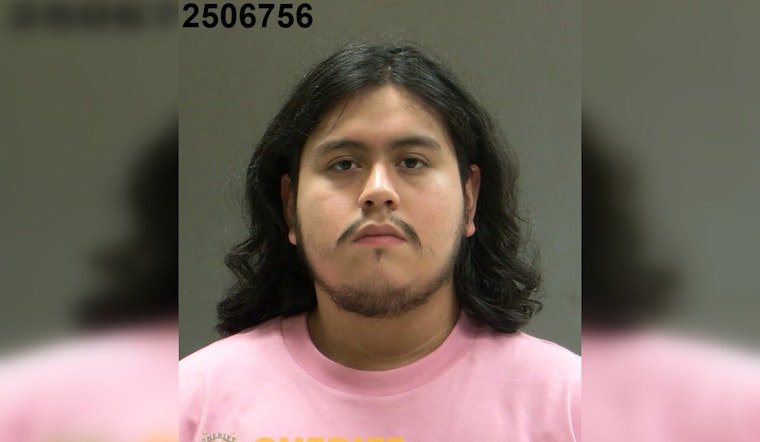
In a solemn turn of events, Derek Owen Cuellar-Torres has entered a guilty plea to charges of second-degree murder and first-degree attempted murder, as reported by the Washington County District Attorney's Office. The admission came on July 7, 2025, in connection with a shooting incident dating back to 2023, where Cuellar-Torres, along with associates, orchestrated a violent ambush that resulted in the death of a 17-year-old and wounded another teenager.
At a party held in Hillsboro the evening of October 21, led to tragedy after an attendee's brother felt disrespected by two other guests and sought retribution by contacting Cuellar-Torres and other members of a local gang; text exchanges showed a callous disregard for life, with Cuellar-Torres expressing a desire to "catch a body" before his forthcoming 18th birthday, revealing a grim insight into his psyche before the crime transpired. The encounter unfolded with Cuellar-Torres and an accomplice, both armed, firing at the victims in a premeditated act of violence, detectives uncovered 22 shell casings from the site of the shooting, and swift investigation identified Cuellar-Torres and his ally as prime suspects.
The Washington County District Attorney’s Office detailed how the Hillsboro Police Department's detectives, namely Devin Rigo and Anthony Johnson, were instrumental in piecing together the evidence that led to Cuellar-Torres's conviction, with their commendable investigative work bringing a measure of justice to the case. Cuellar-Torres, who was 30 days shy of adulthood at the time of his crime, was initially processed as a juvenile under reforms from SB 1008 but was transferred to an adult court where he received a life sentence with a minimum of 32.5 years before parole eligibility can be entertained.
Washington County Circuit Court Judge Ricardo Menchaca delivered the sentence to Cuellar-Torres, who will now begin his time at the Oregon Department of Corrections, the weight of his actions condemning him to the realm of imposed penitence and reflection, where the Oregon Youth Authority holds sway over his immediate future. The plea and subsequent sentencing close a chapter on a harrowing tale of youthful indiscretion and violence, the intersection of adolescent bravado and the inexorable march of justice manifests in the administration of a life's turn confined behind the steel and cement of Oregon's correctional facilities.



