

























































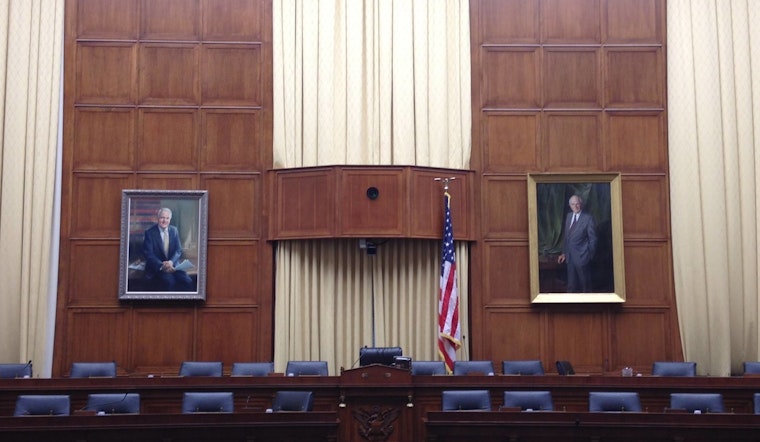
Yesterday, Republicans in the House turned up the heat on ActBlue, a major Democratic fundraising platform, when they issued a subpoena to its CEO, Regina Wallace-Jones. The House Judiciary Committee, along with the House Administration Committee and Oversight and Government Reform Committee, is diving deep into its investigation over the platform's handling of political donations.
Accusations are swirling that ActBlue may have flubbed up by accepting fraudulent donations, which could be stemming from both domestic and foreign sources. According to a press release from the House Judiciary Committee, the inquiry could pave the way for new legislation designed to tighten up the ropes on political fundraising. House Judiciary Committee Chairman Jim Jordan said in a statement that, "To further our oversight and legislative reform efforts, on April 2, 2025, the Committees requested documents and communications related to internal misconduct and whistleblower retaliation at ActBlue."
This isn't the first time ActBlue has been asked to open its books. Initially, the platform provided documents voluntarily, but as the investigation continued, ActBlue cut off its cooperation, prompting a subpoena for the material. As the House Committees seek to assert their oversight authority, the platform's cease in cooperation has driven a wedge in a probe that seeks transparency and reform.
Rumblings about the integrity of online political fundraising platforms are not new; this scrutiny only adds to a broader conversation about the nature of money in politics. One of the Chairs, Representative James Comer, expressed frustration over the halted cooperation, "Although ActBlue initially provided documents voluntarily, it has since suspended its cooperation with the Committees. Therefore, the Judiciary Committee must resort to compulsory process to obtain the requested materials." This statement underscores the tension between a platform synonymous with Democratic fundraising and a Republican-controlled House looking for legislative levers to pull.
As the investigation pushes forward, and with the issued subpoena now in the public domain, the standoff between ActBlue and the House committees shines a spotlight on the mechanics of political funding and the laws that govern it. What's clear is that this inquiry is not just about digging through ActBlue's past actions; it's about shaping the future of how political campaigns are fueled financially.





