

























































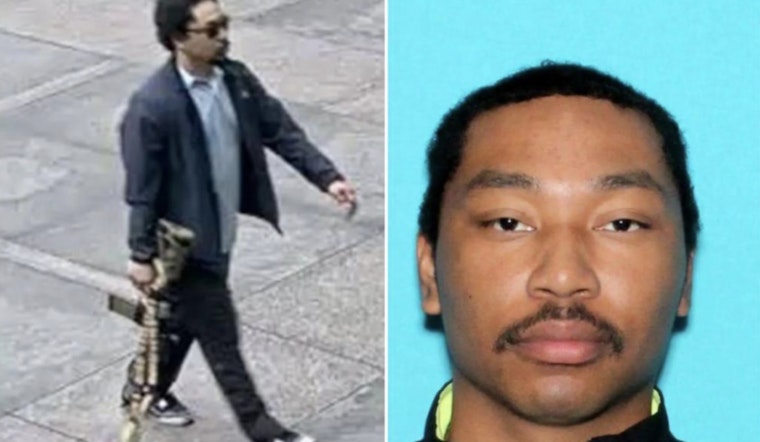
The tragic events that unfolded in Midtown Manhattan on Monday took an even more curious turn as details emerged about the shooter, Shane Tamura, a 27-year-old with a documented mental health history who killed four before dying by suicide. In his pocket, a note was found where Tamura claimed he suffered from CTE, a brain disease often associated with repeated head injuries and notably, with the high-impact sport of football, ABC News reported.
Tamura, who has no known professional connection to the sport, still made vague references to the NFL in his note, blaming the league for concealing the dangers to players' brains to maximize profits, and asking for his brain to be studied, a chilling request echoing through the corridors of 345 Park Avenue, the location of the shooting and also where the NFL headquarters reside, though the leap to link his actions to his high school football days and subsequent mental health crises, remains speculation at this point and police have found no evidence so far of a traumatic brain injury, according to the ABC News.
The suspect's background included two mental health crisis holds in Nevada and a concealed carry permit issued in the same state, which begs a question about the adequacy of background checks considering the severity of his mental health issues, Shane walked into the Park Avenue building carrying an M4 assault rifle that, according to ABC News, was partially purchased by a co-worker.
Focusing on CTE, a condition that can only be diagnosed post-mortem, the recent NYC shooting reignited discussions about the disease which has been prominently discovered among former NFL players; CTE has been linked to a slew of neurological and behavioral changes, including impulsivity and suicidal ideation, which Dr. Aaron Lord, chief of neurology at NYU Langone pointed out, "There seems to be a higher rate of CTE than expected among high-caliber athletes who have committed suicide" as told to NBC News, and while there is no direct treatment for the disease, some psychiatric medications can help manage its symptoms despite the challenges in formally diagnosing it without an autopsy.
In the wake of the shooting, a reflection on the complex intersections between mental health, access to firearms, and the potential long-term impacts of high-contact sports, stands as a grim reminder of a society grappling to understand and address the root causes of such tragedies, the Horseshoe Casino, where Tamura was employed, released a statement confirming the employment status of the shooter and expressed their condolences, but as of now, there's a long road ahead in unraveling the many threads woven into this devastating Midtown Manhattan narrative, as reported by ABC News.





