

























































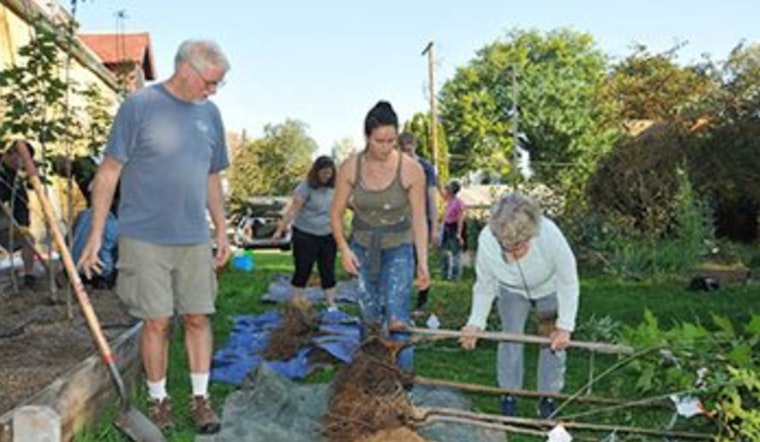
The Metropolitan Council has recently awarded $2.5 million in grants aimed at greening the Twin Cities. These Community Tree Planting grants are destined for 14 cities and regional park agencies, enabling the planting of over 5,100 new trees and the removal of 2,200 hazardous ones. “Trees are one of the smartest long-term investments we can make for our region's future,” Robert Lilligren, Chair of the Met Council's Community Development Committee, told Metropolitan Council's news release. He highlighted the importance of trees in providing clean air, cooling neighborhoods, preventing erosion, and beautifying communities.
At the heart of this initiative is the battle against emerald ash borer infestations and addressing public safety. Funded through state appropriations, the new Met Council program specifically targets areas with insufficient tree canopy and communities facing safety concerns due to diseased ash trees. According to Gillian Greenberg, senior climate planner for the Met Council, the program will deliver "significant, long-term benefits for generations." Removing distressed ash trees would immediately bolster the safety of neighborhoods while newly-planted trees will provide cooling shade, improved air quality, and wildlife habitats. These were the words Greenberg used in a statement obtained by Metropolitan Council's news release.
This latest project by the Met Council responds to concerns about urban heat islands and environmental justice. With the cooling factor of trees reducing air temperatures by up to 10 degrees and filtering air pollution, the grants are seen as an investment in both urban health and equity. State legislation requires prioritizing the removal of risky ash trees and bolstering the canopy in vulnerable communities, considering factors like income and education levels that correlate with environmental health disparities.
The need for greener urban landscapes saw the Met Council receive 31 applications requesting over $5 million in funding. However, only a six-person review panel that included representatives from the Met Council, the Equity Advisory Council, and experts from various environmental organizations, reviewed proposals to make the hard decisions to allocate the funds. As noted by Met Council Chair Charlie Zelle, "When we work together like this, we're not just planting trees, we're growing stronger, more resilient communities that benefit everyone in our region," in a sentiment reflected by Metropolitan Council's news release.
Among the major grant recipients is the Minneapolis Park and Recreation Board, which received the largest award to replace 900 trees citywide, and the City of West Saint Paul, which got the second-largest grant for planting 250 trees, primarily in disadvantaged neighborhoods. “We’re excited to join the Community Tree Planting Grant program and plant resilient, climate-adapted trees that will help our neighborhood recover from emerald ash borer losses,” said Jim Hauth, Public Works Director at Vadnais Heights, according to a Metropolitan Council's news release. The trees planted will be selected to improve the urban forests' diversity and resilience to future climatic challenges and pests. Beyond immediate safety, the benefits include reduced energy costs, better air quality, enhanced stormwater management, increased property values and neighborhood appeal, as well as vital wildlife habitat corridors.
All projects financed by these grants must be completed by June 30, 2027. The Met Council plans on monitoring progress and evaluating outcomes to help steer future funding cycles. The Community Tree Planting Grant Program, established with a specific allocation by the Minnesota Legislature in 2024, underscores trees' vital role in green infrastructure, climate resilience, and public health.





