

























































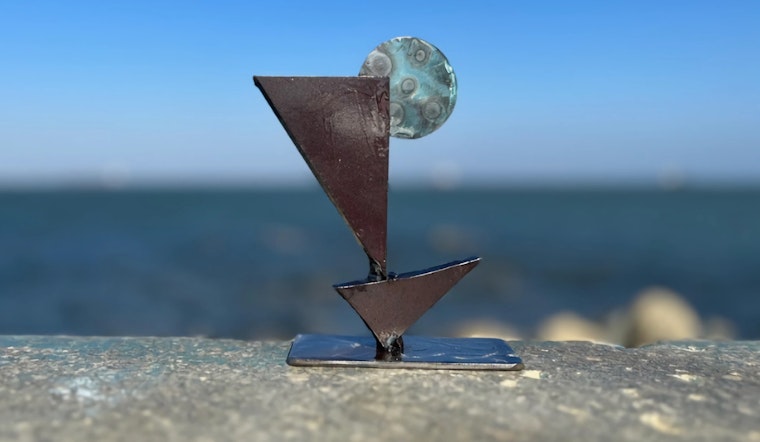
A yearlong artistic journey at India Basin Waterfront Park reaches its culmination this month, as two local artists prepare to unveil projects that emerged from deep community engagement in one of San Francisco's most historically significant neighborhoods. The timing feels particularly poignant as the Bayview-Hunters Point community grapples with ongoing arts displacement pressures that threaten to reshape its creative landscape.
Afatasi the Artist and Conni McKenzie, both San Francisco-based creators, spent twelve months embedded in the park's transformation as part of the San Francisco Arts Commission's Artist-in-Residence program. Their upcoming public presentations mark not just the end of individual artistic endeavors, but a broader test of whether expensive park development can genuinely preserve community culture rather than accelerate gentrification. Each artist received $40,000 for their 12-month residencies, working within the park's ambitious Equitable Development Plan.
Art as Community Reclamation
The residency program deliberately centered artists who could speak to the neighborhood's evolving identity. Afatasi the Artist, whose work explores what she calls "the vastness of the global Black experience," will present "Finders Keepers" on September 6—an interactive treasure hunt featuring hand-welded sculptures hidden throughout the park. According to the San Francisco Arts Commission, the project pays tribute to Black women welders who worked in Bayview shipyards during World War II, connecting contemporary art-making to local labor history.
Conni McKenzie, known for her fusion of dance and filmmaking, turned to photography for her culminating project "Roots, Tides, Leaves." The exhibition, running August 9-16 at the EcoCenter at Heron's Head Park, features images of Black residents engaging with nature in the Bayview-Hunters Point area. As McKenzie told the Arts Commission, the work seeks to "reconnect and welcome home" Black bodies to natural spaces, challenging narratives that often exclude people of color from environmental discourse.
Development Pressures and Creative Displacement
The artists' community-focused work unfolds against a backdrop of significant displacement pressures affecting Bayview's creative ecosystem. Most notably, The Box Shop—the collaborative industrial arts space where Afatasi has been a longtime member—was forced to relocate due to the India Basin park development. The 20-year-old artist collective, famous for creating large-scale Burning Man installations and the popular "Entwined" LED forest in Golden Gate Park, secured a new location at 1265 Van Dyke Avenue after a $2.3 million fundraising campaign that included a $1.7 million state grant.
The Box Shop's displacement represents a broader pattern affecting Bayview arts organizations. SCRAP, the 50-year-old creative reuse nonprofit, faces eviction from its longtime warehouse home as reported by Mission Local, as the school district plans facility renovations. These moves reflect ongoing tensions between infrastructure improvements and community preservation in a neighborhood that has historically been home to some of the city's most affordable creative spaces.
Testing the Equitable Development Model
The India Basin project was designed specifically to avoid traditional gentrification patterns through its community-driven Equitable Development Plan. The $200 million park development represents one of San Francisco's most significant environmental justice investments, transforming former brownfield sites into accessible waterfront space. The plan identifies six focus areas, including "Arts, Culture and Identity," which the artist residency program directly addresses.
David Froehlich, a project manager with San Francisco Recreation and Parks, acknowledged community concerns about "greenification" leading to displacement. As he told The Standard, the park was "designed with residents' concerns at every step" to prevent such outcomes. The success of this approach may depend partly on whether cultural programming like the artist residency can genuinely root new amenities in existing community networks.
Community Arts in Context
The India Basin residency builds on a robust ecosystem of community-based arts organizations that have operated in Bayview-Hunters Point for decades. BAYCAT (Bayview Hunters Point Center for Arts and Technology) provides digital media training to young people of color, as noted by Guidestar, while the Shipyard Trust for the Arts has operated artist residencies at the Hunters Point Naval Shipyard since 1996. These programs emphasize workforce development alongside artistic expression, reflecting the neighborhood's pragmatic approach to creative work.
The Arts Commission's Ralph Remington praised the completed residency for creating "work that celebrates Black life and history in San Francisco and the Bayview-Hunters Point neighborhood." According to the commission, the program encourages artists to "explore beyond the department and embed themselves into the neighborhoods and communities served by their work."
Both upcoming events are free and designed for broad community participation. McKenzie's exhibition opening includes an artist talk on August 9 from 1 to 4 p.m., while Afatasi's interactive event features a live welding demonstration at 1:30 p.m. on September 6. The accessibility of these presentations reflects the residency program's emphasis on community engagement over traditional gallery-based art consumption.





