

























































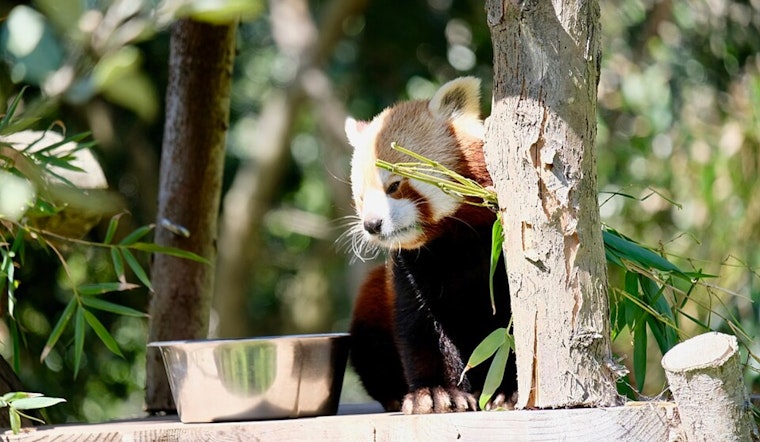
The San Francisco Zoo announced today the death of Tenzing, its beloved 12-year-old Himalayan red panda who captured hearts worldwide with his playful antics and viral videos. The loss comes as the 95-year-old facility faces mounting criticism over animal safety and welfare conditions.
Tenzing died from complications related to sarcocystosis, a parasitic infection known to affect red pandas. The zoo's veterinary team, working with the San Francisco Animal Medical Center, conducted extensive diagnostic testing after Tenzing began experiencing intermittent neurological symptoms and balance issues in recent months.
A Star Ambassador for Conservation
According to ABC7, Tenzing arrived at the zoo in 2014 as part of the Association of Zoos and Aquariums Species Survival Plan for red pandas. Named after Sherpa Tenzing Norgay, who famously climbed Mount Everest with Sir Edmund Hillary in 1953, the red panda quickly became an internet sensation. His playful somersaults and engaging personality led to viral videos that were shared millions of times across social media platforms.
The red panda's habitat was custom-built by the crew from Animal Planet's "Treehouse Masters" television show, as reported by NBC Bay Area. Tenzing was known for his remarkable cooperation in his own healthcare, voluntarily stepping onto scales, entering crates, and even holding brushes to create watercolor paintings.
Red Pandas: The Real "Turning Red" Connection
Red pandas gained additional cultural prominence through Disney Pixar's 2022 animated film "Turning Red," which tells the story of a 13-year-old girl who transforms into a giant red panda when experiencing strong emotions. According to Wikipedia, Pixar animators actually visited the San Francisco Zoo to study Tenzing and his companions for the film, observing their behaviors and movements to create authentic animations.
The film's director, Domee Shi, drew inspiration from the red pandas' unique characteristics and behaviors observed during multiple research visits to the zoo. The movie helped introduce these endangered animals to millions of viewers worldwide, highlighting their plight in the wild where fewer than 10,000 remain according to the World Wildlife Fund.
Endangered Species Facing Multiple Threats
Red pandas are currently classified as endangered by the International Union for Conservation of Nature, with populations declining by an estimated 40% over the past two decades. Treehugger reports that habitat loss, fragmentation, and degradation represent the primary threats to wild red panda populations. The species faces additional challenges from climate change, poaching for their distinctive red fur, and accidental trapping in snares meant for other animals.
Native to the Eastern Himalayas and southwestern China, red pandas require specific bamboo forests at high altitudes. The Red Panda Network notes that the forests where red pandas live serve as the "lungs of South Asia" and are crucial for combating global climate change. When these ecosystems are destroyed, it affects not only red pandas but entire ecological systems.
Conservation Efforts and Species Survival Plans
Zoos like San Francisco's play a critical role in red panda conservation through breeding programs and educational outreach. The Smithsonian National Zoo reports that red pandas are legally protected in India, Bhutan, China, Nepal, and Myanmar, though enforcement remains challenging. Conservation organizations are working to establish wildlife corridors, train local "forest guardians," and develop sustainable tourism as alternative income sources for communities in red panda habitat.
San Francisco Zoo's Troubled Safety Record
Tenzing's death occurs against a backdrop of longstanding safety concerns at the San Francisco Zoo. Wikipedia documents a troubling pattern of incidents dating back to 2007, when Tatiana, a Siberian tiger, escaped her enclosure and killed a 17-year-old visitor before being shot and killed by police.
Recent incidents have intensified scrutiny of the facility's management and infrastructure. In 2014, Kabibe, a young gorilla, was fatally crushed by a hydraulic door malfunction. The San Francisco Chronicle reported that in 2023, a grizzly bear chased a zookeeper after a door to her den was inadvertently left open, and a penguin named Handy Harry was killed by a guillotine shift door.
Scathing Safety Report
ABC7 reported that in October 2024, the San Francisco Animal Control and Welfare Commission released a damning report describing the 95-year-old facility as "extremely outdated" and "unsafe for visitors and animals." The commission found that many enclosures failed to meet basic animal welfare standards and called the facility "dilapidated."
The report came as the city pursued controversial plans to house giant pandas at the zoo, a $70 million project that critics argue diverts resources from improving conditions for current animals. In Defense of Animals reports that 97% of the zoo's union members voted no confidence in CEO Tanya Peterson, citing management's negligence toward both animal and staff safety.
Recent Animal Deaths and Union Concerns
Animal welfare organizations have documented numerous recent deaths at the facility. In Defense of Animals lists additional fatalities including Oscar Jonesy, a gorilla who died in 2024, and deaths of wallaroos and a red kangaroo in 2020 when a predator entered their unsafe enclosure. Recently, a penguin died from a mold-caused infection, and a pelican is presumed to have died from predation due to unsafe enclosure conditions.
The pattern of incidents has led to significant turnover among zookeeping staff, with many citing safety concerns for both animals and employees. The zoo has faced criticism for prioritizing expensive new projects like the panda exhibit over fundamental infrastructure improvements and staff training.
Financial and Political Pressures
The controversy has had financial implications for the institution. CBS San Francisco reported that a major donor has withdrawn funding, citing concerns about the zoo's leadership and focus on costly new projects rather than improving living conditions for current animals.
San Francisco faces an $800 million budget shortfall, making the zoo's expensive panda acquisition plans particularly controversial. Critics argue that the estimated $70 million over 10 years could be better spent addressing the facility's fundamental infrastructure problems and ensuring proper care for existing animals.
Calls for Management Changes
The San Francisco Standard published an opinion piece calling for decisive action, including canceling the panda plans, terminating the management contract with the San Francisco Zoological Society, and establishing an oversight commission focused on animal welfare. The editorial suggested that the Conservation Society of California, which runs Oakland's zoo, could provide more progressive management.
Legacy of Tenzing and Path Forward
Despite the controversies surrounding the facility, Tenzing's impact on red panda conservation cannot be understated. His viral videos and appearances helped raise awareness about the plight of red pandas in the wild, inspiring countless visitors to support conservation efforts. The zoo's Executive Vice President of Animal Care, Eric Krussman, who helped design the red panda exhibit, emphasized Tenzing's role as both an ambassador for his species and a beloved family member to zoo staff.
Hoodline previously covered how Tenzing and his companions provided comfort to stressed San Francisco residents during the 2016 election through a special Firefox-sponsored video stream, demonstrating the therapeutic value these animals provide to the community.
As the zoo continues to face calls for reform, Tenzing's death serves as a reminder of both the vital conservation work that responsible zoos can accomplish and the urgent need for improved animal welfare standards. The facility must balance its conservation mission with the fundamental responsibility to provide safe, appropriate care for the animals in its custody.
The San Francisco Zoo houses its remaining red panda, Little Mebo, who represents the Chinese subspecies and arrived in 2024. Red pandas typically live 8-10 years in the wild but can reach up to 15 years under proper human care, making Tenzing's 12-year lifespan within the normal range for the species.
Bottom line: While Tenzing's death from a parasitic infection appears to be from natural causes affecting red pandas in captivity, it has reignited concerns about the San Francisco Zoo's overall management and safety practices, potentially complicating the city's controversial plans to house giant pandas at the aging facility.



