

























































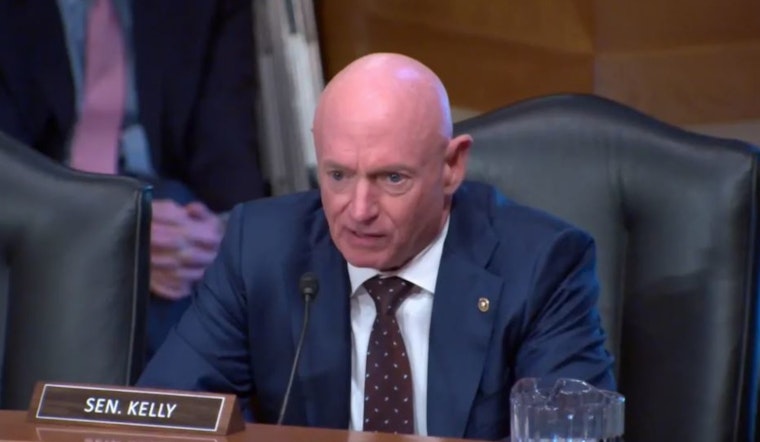
During a recent Senate Environment and Public Works Committee hearing, Arizona's own Sen. Mark Kelly took the stage to advocate for federal investments aimed at adapting cities like Phoenix to the rigors of extreme heat and the demands of a blossoming tech economy. In his push for aid, Kelly underscored Phoenix's unique challenges as an "urban heat island," and the critical need for energy grid resilience in the face of scorching temperatures, according to a statement issued by his office.
Joining Sen. Kelly was Phoenix Mayor Kate Gallego, who during her testimony vocally supported the senator's points. Recognizing the lethal implications of extreme heat, Gallego emphasized that infrastructure funding has yet to catch up with this burgeoning national issue. "We are losing more Americans to heat than any other type of natural disaster," she remarked, highlighting the disparity between current funding models and the exigency of today's climate-related challenges. Phoenix, as Mayor Gallego outlined, is at the forefront of these heat challenges, a trend mirrored even in the country's northernmost parts.
Remarkably, the senator also stressed the potential hazards related to Phoenix's tech-sector growth. The arrival of data centers and a boom in semiconductor manufacturing, interests supported by Kelly's legislative efforts, pose a weighty burden on existing infrastructure, as highlighted in the press release. For example, the data centers alone have placed a request for a staggering 32 gigawatts of new electricity, a demand that surpasses the current utilities' output for the region.
Both officials presented a case for proactive federal support, with Sen. Kelly addressing the necessity of programs like the Healthy Streets initiative that he helped insert into the Bipartisan Infrastructure Law. "This is a trend we're not talking about enough as a country," Mayor Gallego added, touching on the implications of the city's advancing tech industry and the associated strain on transport and utility networks. In their testimonies, the urgency of updating both infrastructure and regulation to accommodate new industrial realities was clear.



