

























































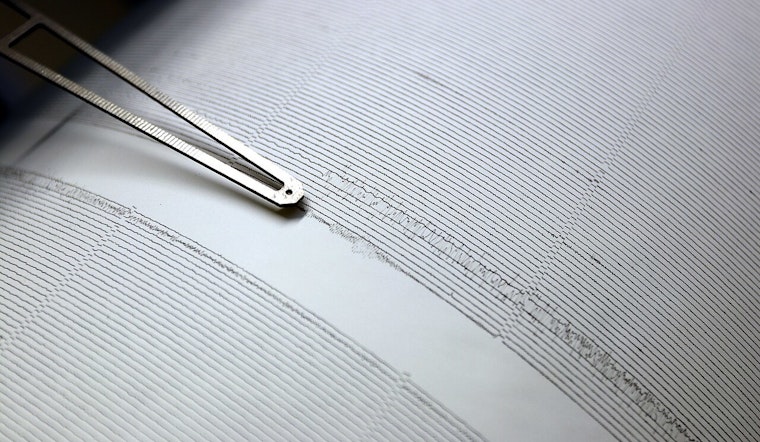
Residents across San Bernardino and Riverside counties received a jarring wake-up call Thursday morning as a series of earthquakes, including a 4.3-magnitude tremor, shook the region. The seismic activity commenced with a 3.0-magnitude quake near Rialto, followed by a 2.8-magnitude tremor and a cluster of aftershocks, as reported by CBS Los Angeles. Dr. Lucy Jones, a renowned seismologist, identified these earlier shakes as "foreshocks" to the more significant 4.3-magnitude earthquake that occurred near Muscoy at 9:32 a.m.
According to NBC Los Angeles, the shaking from the main event was felt as far north as Bakersfield and as far south as Santa Ysabel, prompting over 6,700 responses to the USGS Felt Report. Following the main shock, another 3.1-magnitude quake struck the area, which also impacted parts of Riverside County including Jurupa Valley and Eastvale.
Residents from Laguna Niguel, Beverly Grove, Irvine, and Laguna Woods called CBS Los Angeles to report the shaking. People in Los Angeles, Santa Monica, and Torrance, among other locations, also felt the tremors of the earthquakes that spread across Southern California. The series of quakes originated in what Dr. Jones described as the "Fontana trend," a zone that historically experiences clusters of seismic events.
KTLA noted, "Yes Southern California, that was an earthquake you just felt. Today’s reminder that California is earthquake country," echoing the USGS Earthquakes' post on social media. While reports of significant damage are currently nonexistent, the rattling serves as a stark reminder of California's vulnerability to the whims of its tectonic landscape. Historically, the region has experienced about 130 earthquakes of magnitude 3.0 and greater since 1990, and Thursday's quake count supplements that tally.
As is customary practice during such natural occurrences, the California Department of Public Health advises residents to "Drop, Cover, and Hold On" to minimize the risk of injury. This quake swarm underscores the ongoing geological volatility of the area, which in North America, is only surpassed by Alaska in terms of annual earthquake frequency. The USGS continues to monitor the aftershocks and potential seismic activities following this event.





.jpg)