

























































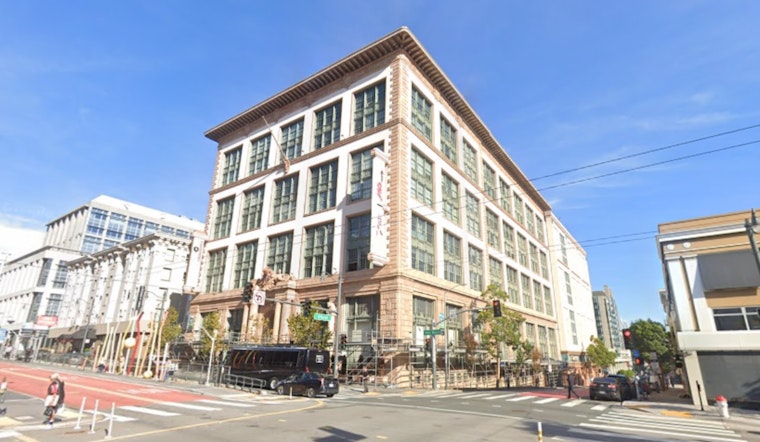
Just weeks after San Francisco Mayor Daniel Lurie celebrated the opening of a new movie theater at the historic Don Lee Building on Van Ness Avenue, the venue finds itself at the center of a high-stakes legal battle with one of the world's most valuable companies. Apple Inc. has filed a federal lawsuit against Apple Cinemas, alleging the small Massachusetts-based theater chain is deliberately capitalizing on the tech giant's brand as it expands into Silicon Valley's backyard.
The lawsuit, filed August 1 in Massachusetts federal court, represents Apple's latest effort to protect its trademark in an increasingly converged entertainment landscape where the Cupertino company has become a major player through Apple TV+, Apple Studios, and its Academy Award-winning film productions. The timing is particularly striking given that Apple Cinemas is currently screening Apple's own "F1: The Movie" at its new San Francisco location.
A Theater with a Troubled Past
The 14-screen multiplex at 1000 Van Ness Avenue has experienced a tumultuous history that mirrors the broader challenges facing San Francisco's entertainment venues. After AMC Theatres converted the 1921 Don Lee Building—originally an ornate Cadillac showroom—into a cinema complex in 1998, the venue operated successfully for two decades, generating nearly $8 million in its final year before closing abruptly in February 2019.
The space's next chapter proved even more dramatic. Korean conglomerate CJ CGV took over during the pandemic, opening in September 2021 with ambitious plans for 4DX technology and synchronized motion seats. However, according to Variety, the company burned through $54 million in just 18 months before closing in February 2023, unable to negotiate lower rent after signing a $75.2 million guarantee to the building's owners.
James Kilpatrick, an investor in the partnership that owns the Don Lee Building, told the Chronicle that despite these setbacks, the location had been one of the city's top-grossing theaters. The completion of Muni's Van Ness Bus Rapid Transit project in 2022, after years of disruptive construction, was expected to help revitalize the corridor.
The Legal Battleground
Apple's complaint alleges that the theater chain's expansion into the Bay Area—less than 50 miles from Apple Park headquarters—represents a deliberate attempt to trade on the tech company's goodwill. The lawsuit points to social media confusion, with the Hollywood Reporter noting that online commenters have asked questions like "Is this another Apple brand?" and whether the theater shows "only Apple TV films."
Oakland trademark attorney Andy Jacobson, whose Bay Oak Law firm specializes in intellectual property disputes, offered his assessment to the Mercury News. "Apple has a pretty good case," Jacobson said after reviewing the lawsuit, warning that the Cupertino firm's overwhelming resources could drive Apple Cinemas' legal costs into the millions. "You don't step on Superman's cape. If I were Apple Cinemas, I would be seeking a way out of this as quickly as possible."
The dispute has been brewing for months. According to the Chronicle, Sand Media, Apple Cinemas' parent company, applied last year to register "Apple Cinemas" and "ACX — Apple Cinematic Experience" as trademarks but was denied by the U.S. Patent and Trademark Office. The examiner concluded that the movie theaters are "closely related" to Apple Inc.'s entertainment services, including Apple Studios and Apple TV+, and may cause consumer confusion.
Quality Concerns Add Fuel to the Fire
Perhaps most damaging to Apple Cinemas' position are the quality complaints cited in Apple's lawsuit. The tech giant, known for its obsessive attention to customer experience, alleges its brand could be damaged by association with Apple Cinemas' operations. The suit highlights social media comments describing some Apple Cinemas locations as "greasy," "dirty" and "grungy," with customers complaining about technical issues including projection systems and online purchasing portals.
This stands in stark contrast to Apple's meticulously designed retail stores, which have become architectural landmarks and set industry standards for customer service. The company clearly views any confusion between its premium brand and a theater chain with mixed reviews as a serious threat to its carefully cultivated image.
Local Impact and Industry Context
The lawsuit arrives at a particularly sensitive time for San Francisco's struggling cinema landscape. The Bay Area has seen numerous theater closures in recent years, with the region losing ShowPlace Icon theaters in San Jose and Mountain View in 2024, and the Cinemark Century Northgate in San Rafael closing in November 2024. Industry-wide, 5,700 movie screens have shut down nationwide, with 2024 box office grosses falling 23.5% below pre-pandemic levels.
Apple Cinemas had positioned itself as part of Van Ness Avenue's revitalization, with co-founder Siva Shan and Director of Operations Jessica Robitaille expressing optimism about the San Francisco market. The company's ambitious plans include opening 100 locations nationwide over the next decade, with a second Bay Area location planned for the former Century Blackhawk Plaza in Danville.
However, that Danville opening has already hit snags. Apple Cinemas announced on Instagram that "unexpected delays outside of our control related to the property owner" have pushed the opening to early 2026. Apple's lawsuit reveals the company sent letters to both the San Francisco and Danville landlords about the trademark dispute, receiving no responses.
A History of Apple vs. Apple
This isn't Apple's first trademark battle over its name. The company famously engaged in a decades-long dispute with Apple Corps, the Beatles' holding company, which was ultimately settled in 2007 for a reported $500 million, with Apple Inc. gaining control of all Apple-related trademarks.
The tech giant has also pursued trademark actions against numerous other entities, from a Ukrainian filmmaker who wanted to name his movie "Apple-Man" to Microsoft over the "App Store" name. With Apple's expansion into entertainment through Apple TV+ and Apple Studios, which launched in 2019, the company has become increasingly protective of its brand in media-related spaces.
Legal Implications for Bay Area Businesses
The case highlights the complex trademark landscape facing businesses in the Bay Area, where tech companies' expansion into new sectors creates unexpected conflicts. Wilson Sonsini trademark attorney Christine Au-Yeung, who practices in San Francisco and Palo Alto, recently discussed at an ACC San Francisco Bay Area event how companies must navigate increasingly blurred industry boundaries when protecting their brands.
For small businesses, the message is clear: trademark due diligence is essential, especially when expanding into markets dominated by large corporations. The fact that Apple Cinemas operated for a decade in the Northeast without issue, only to face legal action upon entering the Bay Area, demonstrates how geographic proximity to a trademark holder's headquarters can trigger enforcement actions.
What's Next
Apple is seeking both an injunction to force Apple Cinemas to change its name and unspecified monetary damages. Given Apple's track record in trademark disputes and its vast legal resources—the company made $93.7 billion in profit last year—the theater chain faces an uphill battle.
For now, San Francisco moviegoers can still catch films at Apple Cinemas Van Ness, where adult tickets for regular seats cost $18.75. The theater features IMAX and what's advertised as San Francisco's first LED cinema screen, with plans for eventual additions including a restaurant, bar, and recliner seats. Whether it will still be called Apple Cinemas when those upgrades arrive remains to be seen.
The case is particularly ironic given that Mayor Lurie's June announcement celebrating the theater's opening came just weeks before Apple filed its lawsuit. What was intended as good news for a city desperate for signs of economic revival has instead become another reminder of the legal complexities facing businesses operating in Big Tech's shadow.





