

























































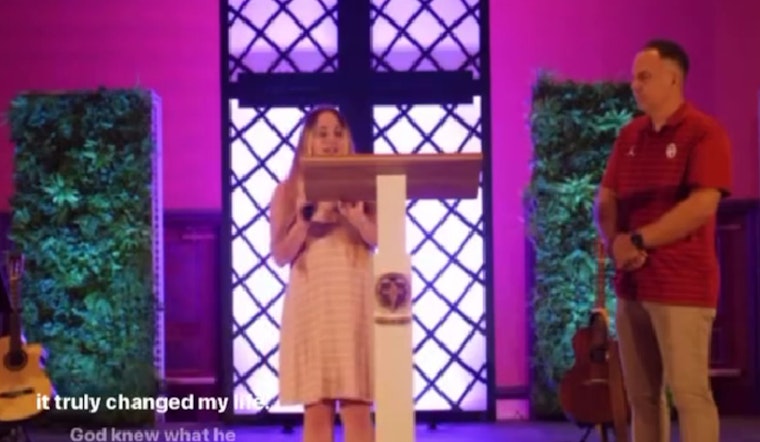
In a recent social media update from the Cleveland County Sheriff's Office in Oklahoma, a significant shift has been highlighted within the confines of the Cleveland County Detention Center—an initiative that's impacting lives beyond the traditional scope of incarceration.
About twelve weeks ago, the jail initiated its very first praise and worship service, a program that appears to have had a profound effect on at least one individual, as she completed her journey through the correctional system, her subsequent release marked not just by freedom from physical incarceration but an emancipation from addiction and shame, and according to the Cleveland County Sheriff's Office post, "one of the inmates who attended that day never missed a single week after."
This narrative unfolding inside the detention center walls points to a broader philosophical conversation about the nature of reformative justice and whether traditional punitive measures are enough to foster true change among inmates—suggesting that perhaps introducing elements of spiritual guidance could play a pivotal role in rehabilitation as noted, "This is the power of jail ministry," from the Cleveland County Sheriff's Office's account.
The Cleveland County Sheriff's Office post continued to emphasize the personal transformation, testifying, "She's clean. She's hopeful. She has a purpose," and not as a result of any single program but via a change of heart, and in doing so the Sheriff's Office advocates a kind of intervention that aims for redemption and addressing recidivism at its root, "What I’ve witnessed in this young lady and in others beginning to follow her path—is the proof that true rehabilitation begins with a spiritual transformation," further reflecting on the transformative potential of such endeavors.
Implicit in these declarations is a call to action, a beacon for community engagement, with the Cleveland County Sheriff's Office urging the public and perhaps other institutions to recognize the value found in these efforts: "Let’s keep planting seeds," and underscoring their belief in the difference such ministries can make in the arduous path towards redemption and rehabilitation, "To anyone out there wondering if jail ministry makes a difference: Yes, it does. I’ve seen it with my own eyes," thus concluding their testimony with a note of optimism for the future of such programs.





