

























































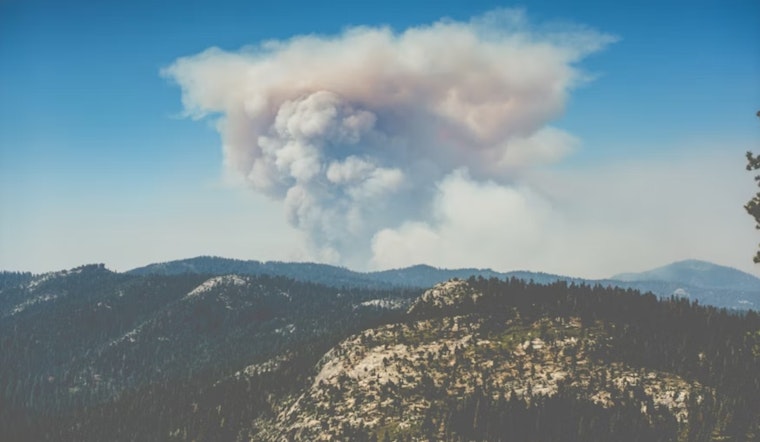
Wildfires, those devastating natural phenomena that char our landscapes and cloud our skies, are more than just a visual menace; they're breeding grounds for a near-invisible assailant on public health: ozone pollution. A recent study led by the University of Utah, and detailed in At The U, sheds light on how wildfire smoke substantially drives up ozone levels, exacerbating air quality issues far from the blazes and often surging past federal health standards.
Derek Mallia, the lead author of the research, posed a critical question: "If we don’t have urban emissions, let’s say that we zero out all emissions, will we still have an ozone problem?" As cited by At The U, Mallia found that even without regional emissions from human-made sources, wildfires could still pitch a substantial quantity of ozone into the atmosphere. This suggests a more dire situation than previously understood, where our control over air quality might be more limited in the face of nature's fury.
Ozone, a lung-irritating compound, isn't emitted directly by these fires but forms when pollutants released by the flames undergo sunlight-induced photochemical reactions. The main ingredients, nitrogen oxides (NOx) and volatile organic compounds (VOCs), mix amid the smoke and heat and create a cocktail harmful to human health, a detail captured in the intricate modeling efforts by Mallia's team using advanced tools like the WRF-Sfire and WRF-Chem models. These efforts were necessary, as ozone is a tricky pollutant to predict due to its reliance on a plethora of factors, including the weather and the time of day.
During one of the most severe fire periods in recent history, the August 2020 blazes that swept through the Western United States, Mallia and his team discovered that wildfire smoke could increase ozone concentrations by an average of 21 parts per billion. As detailed in At The U, "Ozone was roughly 20 to 30% higher because of wildfire smoke," said Mallia, highlighting the significant impact wildfires have on compounding air pollution problems.
However, the study notes that this scenario is further complicated because while the smoke from wildfires contributes to ozone formation, it also blocks sunlight. This shaded environment can reduce ozone creation within the plumes by as much as 10 ppb in some areas. With variable effects like this, the research underscores the importance of refining predictive models as wildfires become increasingly frequent and severe in a changing climate. Understanding this tangled web of interactions between wildfire, smoke, and ozone is key to anticipating the needs for air quality management and safeguarding public health in the face of these fiery challenges.





