

























































Amid the quiet desert city of Tucson, an armed intrusion at a local school earlier this year has sparked a fierce debate over the administration of justice and the protection of our children. Daniel Hollander, the man who broke onto the school campus gripping a gun and a knife with declared intentions of committing unfathomable violence, was sentenced to a mere 18 months in prison followed by probation — a punishment that State schools chief Tom Horne deems unacceptably lenient.
Horne, bearing the weight of a former Attorney General, expressed his dismay at what he sees as a gross inadequacy in Hollander's sentencing. He argued that the risk posed by Hollander, who was caught by Tucson Police Officer William Bonanno and made no secret of his intentions to "kill children and make them famous," calls for far more than what the sentence delivered. As obtained by the Arizona Department of Education, Horne stated, "Probation is not perfect. If this individual has a bad day, he could go into a school and kill students. In my opinion, the prosecutor’s recommendation should have been at least 20 years in prison to protect our children."
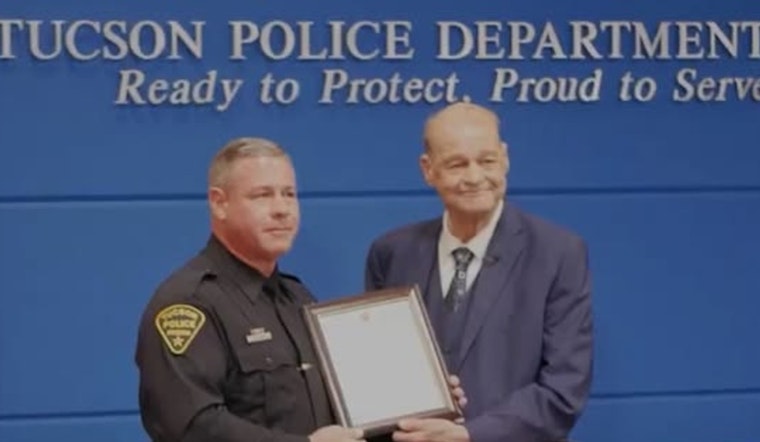
Officer Bonanno, who had been on the school safety roster for only a fortnight, became the bulwark against the potential tragedy. His prompt response and arrest of Hollander averted what could have turned into a harrowing echo of past school tragedies. Horne pointed out that the close shave with disaster underscores the need for increased security measures in schools. In response to the incident, he cited his initiative that saw an increase in school police officers from 190 to 585 over two years. Itemized as fortunate amidst unfortunate circumstances was Bonanno's employment via grants that were made available shortly before the event.
According to the Arizona Department of Education, the heart of Horne's message is a plea to recognize the specter of school violence that has gripped other states and could, but for the vigilant actions of officers like Bonanno, overwhelm Arizona. "This is my worst nightmare," he confessed, with a sense of urgency that resounds all too well in an era rife with all too many nightmares reborn in school hallways. His push for harsher sentences is part of a broader crusade to fortify schools against such threats, with Arizona's children sitting squarely at the epicenter of concern.




