

























































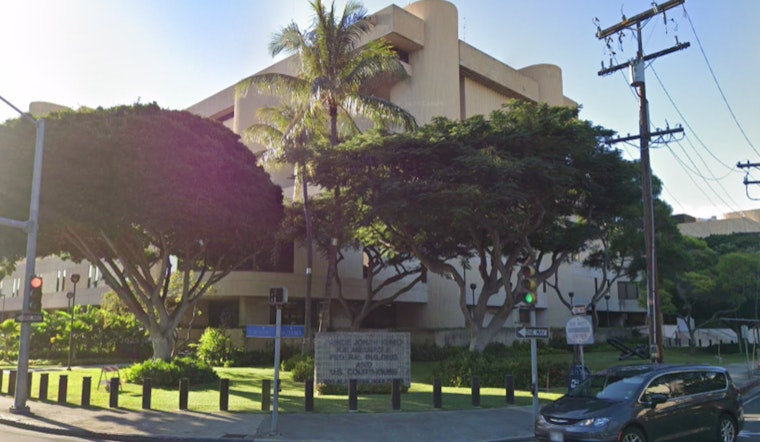
A veteran Honolulu deputy corporation counsel's reliance on nonexistent legal case law to fight a civil rights lawsuit has thrust the city into an embarrassing courtroom drama that highlights growing concerns about artificial intelligence's misuse in Hawaii's legal system. The fictional citation was used in a legal brief attempting to prevent a jury trial in a class-action lawsuit alleging systematic civil rights violations by the Honolulu Police Department.
David Sgan, a deputy corporation counsel for Honolulu, acknowledged his error only after lawyers with the American Civil Liberties Union pointed out the city's reliance on fabricated legal precedent, according to Civil Beat. The underlying lawsuit centers on allegations that the police department engaged in a pattern of arresting sober drivers for driving under the influence, violating their constitutional rights.
AI or Sloppy Work? The Dispute Over Origins
While courts nationwide are increasingly grappling with mistakes made through unethical reliance on artificial intelligence programs, Honolulu's top lawyer attributes the error to simple human negligence. Corporation Counsel Dana Viola blamed the problems on "drafting errors," not AI, as reported by Civil Beat. However, the ACLU argued in court filings that the error bears the hallmarks of AI misuse, which is known to fabricate cases entirely.
The disagreement reflects broader tensions in Hawaii's legal community about artificial intelligence's role in legal practice. Legal technology experts note that generative AI programs can create convincing but entirely fictional legal citations when drafting court documents, as per Cades Schutte.
A Pattern of Fictional Citations in Hawaii Courts
This incident represents part of a troubling trend across Hawaii's legal landscape. In a parallel case, Honolulu lawyer Ka'onohiokalā Aukai IV submitted a brief containing what appear to be completely fabricated "AI hallucinations." Despite the wholesale fabrication of legal precedents, the judge ruled in Aukai's favor without imposing sanctions allowed under Hawaii Rules of Civil Procedure. The leniency stands in stark contrast to sanctions imposed elsewhere. Federal courts in California have fined law firms tens of thousands of dollars for using AI tools to create briefs with fabricated citations, showing that Hawaii takes a more permissive approach to such violations.
Federal vs. State Court Responses
While Hawaii's state courts have shown remarkable restraint, federal courts in the islands have taken a harder line. Hawaii federal courts now require lawyers to disclose when they use AI to produce court documents and verify that material is not fictitious, with violations facing sanctions under Federal Rules of Civil Procedure. Chief Justice Mark Recktenwald established a Committee on Artificial Intelligence and the Courts in April 2024, chaired by Supreme Court Justice Vladimir Devens and First Circuit Court Judge John Tonaki. An interim report originally due in December 2024 remains a work in progress.
The Civil Rights Case at the Center
The lawsuit involves serious claims about the Honolulu Police Department's arrest practices. One plaintiff was pulled over after leaving the Whole Foods parking structure at Ward Village for forgetting to turn on her headlights. The suit says officers duped the driver into declining a sobriety test, then arrested her for refusing the test, even though she later passed a breathalyzer test at the police station. Another plaintiff says "HPD officers continually arrest drivers who show no outward signs of impairment, perform well on field sobriety tests, and who often blow 0.000 on breathalyzer tests," yet was still arrested for operating a vehicle under the influence. The ACLU's investigation suggests officers fabricated police reports to justify arrests after the fact.
Legal and Ethical Implications
Legal experts are calling for stronger deterrence in Hawaii's courts. Paul Alston, a Dentons partner, said the courts need to act, because it's so corrosive to the reputation of the judicial system and the consequences of doing it need to be severe. The ACLU said the city's use of fake case law and misreading of real cases "provide an independent basis to deny the City’s motion" to block a jury trial. They argue these mistakes suggest AI was misused in preparing legal briefs.
Aftermath and Response
After the error was revealed, Sgan asked the court to disregard the spurious legal argument and offered a new reason to oppose the jury trial. He apologized "for the inaccurate and untethered citations to the Chun decision" and admitted the legal propositions were "propositions that follow are not supportable by Chun," as mentioned by Civil Beat. The City and County of Honolulu's Corporation Counsel office has not commented further, aside from Viola's statement attributing the error to drafting mistakes rather than AI misuse. As Hawaii's legal community deals with artificial intelligence, this case is a reminder of the technology's risks and the need for clear statewide guidelines.



