

























































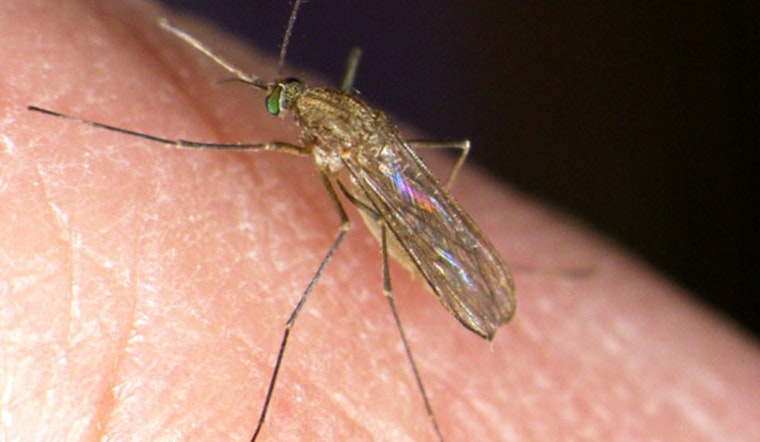
As summer continues to bake Massachusetts, the threat of mosquito-borne illnesses creeps ever closer to the forefront of public health concerns. The Massachusetts Department of Public Health (DPH) has recently announced an elevation in the risk level for West Nile virus (WNV) in several communities. Officials have pinpointed the threat to be specifically high in Acton, Bedford, Billerica, Boston, Brookline, Carlisle, Chelmsford, Dracut, Lowell, and Newton. This uptick comes after the State Public Health Laboratory confirmed the first WNV-positive mosquitoes in the state earlier this season. Since that initial detection on June 17, mosquito surveillance efforts have unearthed 168 WNV-positive mosquito samples across a wide swath of counties, according to a recent update from DPH.
Adding concern to the mix, the DPH has also identified the presence of Eastern equine encephalitis (EEE) in mosquitoes in the region. Noteworthy warnings have been raised for Belchertown, Granby, Pelham, and Ware in Hampshire County, where the risk of EEE is now considered moderate. Twelve additional municipalities in the historically EEE-prone areas of Bristol and Plymouth counties are facing similar moderate risk assessments. Agriculture and health officials are also on alert after an animal case of WNV was confirmed in a goat in Lunenburg, marking a tangible cross-species threat, though no human cases have been reported this year.
Public Health Commissioner Robbie Goldstein, MD, PhD, expressed concern in a statement provided to the DPH, "Both West Nile virus and EEE pose risk to the people in Massachusetts." Goldstein emphasized, "The weather remains warm and somewhat humid, which increases mosquito activity." He urged residents to employ protective measures such as the use of mosquito repellent, wearing long sleeves and pants, and avoiding outdoor activities during peak mosquito hours of dusk to dawn. These integral practices are part of the DPH's broader mosquito awareness and prevention campaign.
Mosquito-proofing one's living area is another critical step in combating these viruses. Simple measures like draining standing water to disrupt breeding grounds, and installing or repairing screens to keep mosquitoes outdoors can make a meaningful difference. Horse owners and animal caretakers aren't exempt from taking action; their role includes maintaining indoor stabling during peak exposure times and discussing approved repellents and vaccinations with veterinarians. If WNV or EEE is suspected in animals, mandated reporting to both the Department of Agricultural Resources, Division of Animal Health, and, to the Department of Public Health is required.
With last year's count of 19 human cases of WNV, the state is keen to avoid a repeat or escalation. State Epidemiologist Catherine M. Brown, DVM, MSc, MPH, told the DPH about the increased rate of WNV findings in mosquitoes, explicitly noting, "We are now in the peak time for transmission of mosquito-borne disease to people," thereby highlighting the immediate need for heightened awareness and protective practices among the public.





